







- Parsley (Petroselinum crispum) Fraction-Loaded Nanoemulsion Using Coconut Oil: A Novel Approach for Hair Growth Promotion
Edwin J. Bunggulawa and Yong-kyu Lee*, **,†

Department of Green Bioengineering, Korea National University of Transportation, Chungju 27470, Korea
*Department of Chemical & Biological Engineering, Korea National University of Transportation, Chungju 27470, Korea
**4D Convergence Technology Institute, Korea National University of Transportation, Jeungpyeong 27909, Korea- 코코넛오일을 이용한 파슬리(Petroselinum crispum) 유래 분획 적재 나노에멀젼: 모발 성장 촉진을 위한 새로운 접근법
에드윈제이카붕굴라와 · 이용규*, **,†
국립한국교통대학교 녹색바이오공학과, *국립한국교통대학교 화공생물공학과, **국립한국교통대학교 4D 바이오용합소재 산업화센터
Reproduction, stored in a retrieval system, or transmitted in any form of any part of this publication is permitted only by written permission from the Polymer Society of Korea.
This study investigates the antioxidant activity and hair growth-promoting potential of a parsley-derived n-hexane fraction formulated into a coconut oil-based nanoemulsion. Antioxidant activity was assessed using the DPPH radical scavenging assay, where the n-hexane fraction exhibited moderate activity, while its activity decreased after formulation into a nanoemulsion due to surfactant interference. Nanoemulsion characterization revealed a droplet size of 12.1 nm, a low polydispersity index (0.083), and a zeta potential of -17.7 mV, indicating uniformity and stability. Cryo-TEM imaging confirmed the spherical morphology and nanoscale size of the droplets. In a hair growth study, the 3% parsley nanoemulsion showed significant regrowth comparable to 3% minoxidil, with visible results by day 10 and near-complete coverage by day 17. These findings highlight the potential of the parsley-coconut oil nanoemulsion as a stable and effective topical formulation for hair growth, with promising applications in drug delivery systems.
본 연구는 코코넛오일 기반 나노에멀전에 제형화된 파슬리 유래 n-헥산 분획의 항산화 활성 및 모발 성장 촉진 가능성을 평가하였다. 항산화 활성은 DPPH 라디칼 소거능 분석을 통해 확인되었으며, n-헥산 분획은 중간 정도의 항산화 활성을 나타냈으나, 계면활성제의 간섭으로 인해 나노에멀전 제형에서는 활성이 감소하였다. 제형의 특성 분석 결과, 평균 입자 크기는 12.1 nm, 낮은 분산도 지수(0.083), 제타 전위는 -17.7 mV로, 제형의 균일성과 안정성을 나타내었다. 또한, Cryo-TEM 이미징을 통해 구형의 나노 입자 구조가 확인되었다. 모발 성장 실험에서는 3% 파슬리 나노에멀전이 3% 미녹시딜과 유사한 수준의 모발 재생 효과를 보여주었으며, 10일 차에 뚜렷한 효과가 나타났고 17일 차에는 거의 완전한 모발 덮임이 관찰되었다. 이러한 결과는 파슬리-코코넛오일 나노에멀전이 안정적이며 효과적인 국소 제형으로서의 가능성을 시사하며, 약물 전달 시스템으로서의 응용 가능성을 보여준다.
A coconut oil-based nanoemulsion loaded with parsley n-hexane fraction was developed and characterized for stability and bioactivity. The 3% nanoemulsion showed hair regrowth effects comparable to minoxidil, highlighting its potential as a natural topical delivery system.
Keywords: parsley( petroselinum crispum), coconut oil, nanoemulsion, hair growth.
This research was supported by the Basic Science Research Program through the National Research Foundation of Korea (NRF), funded by the Ministry of Education (Grant No. 2021R1A6A1A03046418). Additional support was provided by the NRF, funded by the Ministry of Science and ICT (MSIT) of the Korean government (Grant Nos. RS-2024-00405287 and 2021R1A2C2095113).
The authors declare that they have no competing interests.
Hair follicles possess a complex structure and exhibit a remarkable capacity for self-renewal, undergoing a continuous growth cycle throughout a mammal's life.1
This growth cycle process comprises four main phases: anagen, catagen, telogen, and exogen. Various factors, including age, climate, environment, and overall health, influence this process and can lead to conditions such as alopecia areata, hair follicle tumors, and other related disorders.2
These factors may disrupt the hair growth cycle and even trigger hair loss. A commonly used therapy for promoting hair growth is minoxidil. Although its mechanisms of action are not entirely understood, minoxidil is believed to stimulate hair growth through several pathways. These include inducing vasodilation to enhance blood flow to the hair follicles, prolonging the anagen phase, reversing follicular miniaturization, and stimulating follicle activity.3 Despite its effectiveness, minoxidil is associated with side effects such as scalp itching, dryness, flaking, irritation, and burning.4
Parsley (Petroselinum crispum) is a widely used culinary herb with numerous health benefits. Beyond its pharmaceutical applications in treating various diseases, parsley has also been recognized for its beneficial effects on hair health. Traditionally, it has been used as a natural remedy for lice, dandruff, and scalp irritation. Additionally, parsley is known to strengthen weak hair, promote healthy hair growth, and reduce hair fall. Its rich nutrient content supports keratin and collagen production, which protect hair from free radical damage.5 Recent studies have demonstrated that parsley exhibits anti-alopecia properties, promoting hair growth in animal models of alopecia areata.6 Metabolite analyses of ethanolic parsley extracts have identified several bioactive compounds that contribute to hair growth stimulation.7 In particular, the n-hexane fraction of parsley is rich in phenylpropenes, a class of metabolites with potent antioxidant properties that help protect hair from oxidative stress.8
Moreover, polyunsaturated fatty acids (PUFAs) found in parsley extracts have been shown to accelerate hair regeneration by prolonging the anagen phase, enhancing hair coat quality, and improving overall follicular health.9-10
Similarly, coconut oil is well-established in hair care for its effectiveness in reducing protein loss in both damaged and undamaged hair. Lauric acid, a key component of coconut oil, has a high affinity for hair proteins, making it particularly beneficial for hair health.11 Coconut oil has also been reported to possess anti-hair loss properties.12
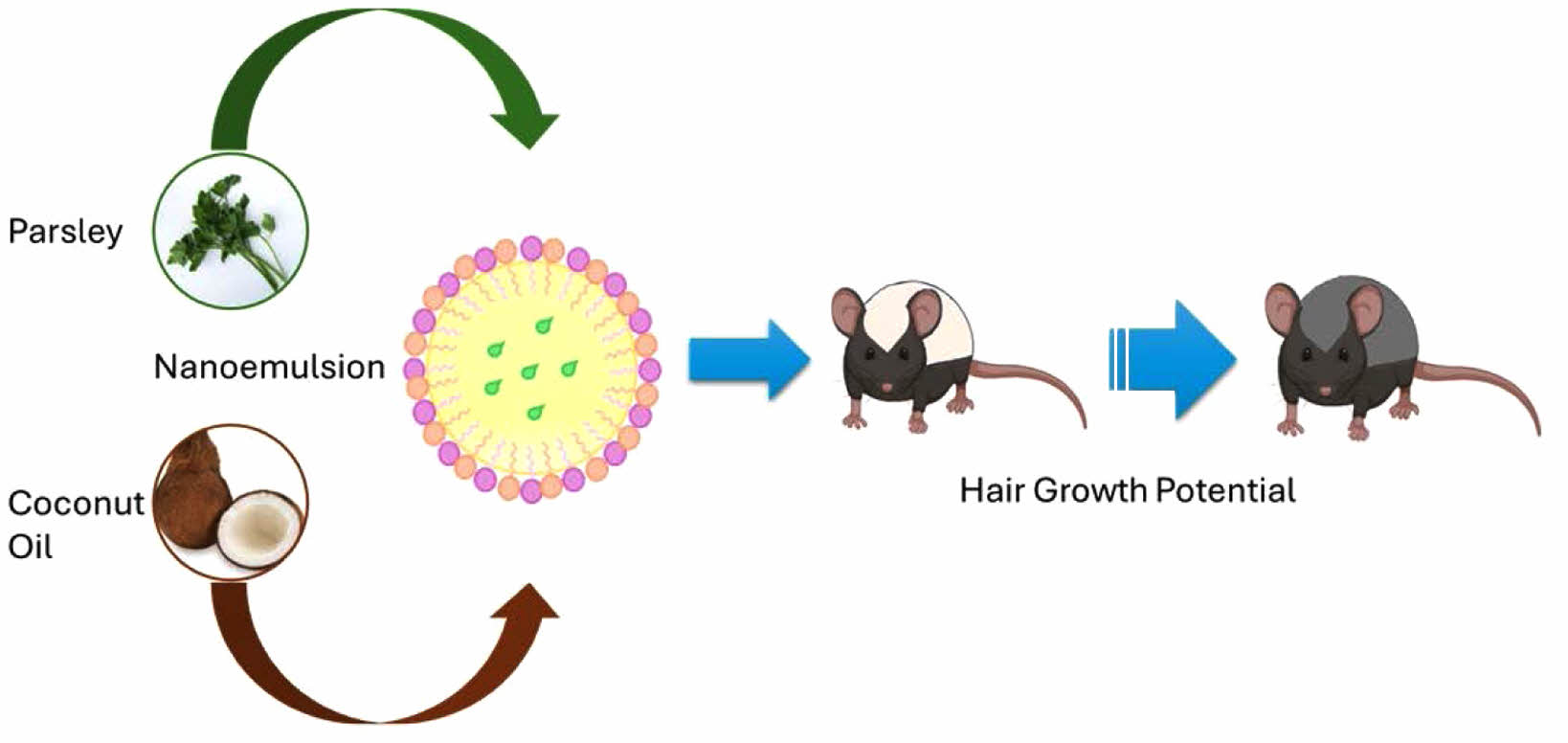
In this study, we developed a nanoemulsion system combining parsley extract and coconut oil to promote hair growth. The oil phase consisted of the n-hexane fraction of parsley diluted in coconut oil, which was then emulsified with surfactants and co-surfactants to form nanoemulsion. The formulation was evaluated for its physicochemical characteristics and its hair growth-promoting effects in vivo. Hair growth activity was assessed through histological analysis, and the results demonstrated the nanoemulsion’s effectiveness in enhancing hair growth.
Plant Material. Parsley herb (Petroselinum crispum) was obtained from a local market in Gyeonggi-do province, South Korea. The herbs were carefully washed and air-dried at room temperature in a shaded area to prevent exposure to direct sunlight. Once dried, the parsley was ground into a fine powder using a commercial grinder and stored in airtight containers at room temperature for future use.
Parsley Extraction and Fractionation. Ultrasound-assisted extraction (UAE) and solvent-solvent partitioning were used to prepare fractions from Parsley. For UAE, 100 g of powdered parsley was mixed with 1000 mL of 98% ethanol (v/v) in a 2000 mL beaker. The mixture was extracted using an ultrasonic bath (NXPC-B unit, KODO Technical Research Co., Ltd., South Korea) operating at 200 W and 40 kHz for 30 minutes at room temperature. After extraction, the mixture was filtered through Whatman No. 1 filter paper, and the filtrate was concentrated using a rotary evaporator (N-1210 B series, Eyela, Japan) at 50 ℃ under reduced pressure to obtain the crude ethanolic extract.13 The crude extract was then subjected to solvent-solvent partitioning. A portion of the extract was dissolved in 250 mL of 98% ethanol (v/v) and transferred to a 500 mL separatory funnel. An equal volume of n-hexane was added, and the mixture was gently shaken with periodic venting. After phase separation, the n-hexane layer was collected. This process was repeated 3–4 times with fresh n-hexane until the organic layer became nearly colorless.14
The n-hexane fractions and the residual ethanol fraction were separately concentrated using a rotary evaporator at 40 ℃ under reduced pressure. The fractions were weighed and stored at -20 ℃ for further analysis.
Preparation of Parsley Nanoemulsion. The formulation was optimized in a previous study using a D-optimal mixture design generated with Design-Expert® software (version 8.0.6, Stat-Ease Inc., Minneapolis, MN, USA). Briefly, 300 mg of the n-hexane fraction of parsley was dissolved in 10 mL of coconut oil in a small vial and mixed thoroughly using a magnetic stirrer at 40 ℃. For the preparation of the nanoemulsion, 1 mL of parsley-enriched coconut oil was combined with 4 mL of Tween 80 (surfactant) and 1 mL of PEG 400 (co-surfactant) and mixed with a magnetic stirrer to achieve a homogeneous oil phase. This oil phase was then emulsified with deionized water under continuous stirring with a magnetic stirrer to form the nanoemulsion system.
Nanoemulsion Characterization. The droplet size and polydispersity index (PDI) of the nanoemulsions were measured using dynamic light scattering (DLS) (Otsuka, Japan). Before analysis, each self-nanoemulsifying drug delivery system (SNEDDS) formulation was diluted at a 1:10 (v/v) ratio with deionized water to ensure optimal measurement conditions. The zeta potential of the diluted SNEDDS formulations was also analyzed using DLS (Otsuka, Japan). Samples were loaded into clear zeta cells, and the surface charge and zeta potential of the emulsion droplets were recorded. To further investigate the morphological characteristics of the nanoemulsions, cryo-transmission electron microscopy (cryo-TEM) was performed using a Glacios cryo-TEM (Thermo Fisher Scientific, USA) operated at an acceleration voltage of 200 kV.
Antioxidant Activity. The antioxidant activity of the plant extract and nanoemulsion was assessed using the DPPH radical scavenging assay, following the method described by Rahman et al.15
This assay evaluates the hydrogen-donating ability of antioxidants by monitoring the decolorization of a methanolic solution of 2,2-diphenyl-1-picrylhydrazyl (DPPH). In methanol, DPPH exhibits a violet color, which fades to yellow upon reaction with antioxidants. A 0.1 mM DPPH solution in methanol was prepared and mixed with the plant extracts and nanoemulsions at varying concentrations (62.5–1000 μg/mL). The mixtures were incubated in the dark at room temperature for 30 minutes, after which the absorbance was measured at 517 nm using a spectrophotometer. Ascorbic acid (Vitamin C) was used as the reference standard. The percentage of DPPH radical scavenging activity was calculated using the formula:

where A0 is the absorbance of the control and A1 is the absorbance of the sample.
In vivo Hair Growth Study. Male C57BL/6 mice (20–23 g) were procured from YoungBio (Seongnam, Korea) and acclimatized for one week in an environmentally controlled facility. The housing conditions were maintained at a temperature of 23 ± 3 ℃, relative humidity of 50 ± 10%, and a 12-hour light/dark cycle. During this period, the mice were provided with a standard diet and unrestricted access to water. To synchronize the hair growth cycle, the dorsal skin of the mice was shaved and chemically depilated. The animals were then randomly divided into four groups: EtOH group (200 μL of 50 wt% aqueous ethanol solution), Minoxidil group (200 μL of 3 wt% minoxidil solution), Nanoemulsion Low dose group (200 μL of 1% parsley nanoemulsion), and Nanoeemulsion high dose group (200 μL of 3% parsley nanoemulsion). Each solution was applied to the dorsal skin five times per week.16 All experimental procedures involving animals were performed in compliance with ethical regulations and approved by 4D Biomaterials Animal Care and Use Committee, with approval No. KNUT IACUC 2024-4B1.
Parsley Nanoemulsion Preparation. Parsley was obtained from a local farm in Gyeonggi-do, South Korea. It was shade-dried to minimize oxidation, ground into a fine powder, and extracted using ultrasound-assisted extraction with 98% ethanol to improve efficiency. The extract was filtered, and ethanol was removed using a vacuum rotary evaporator. The crude extract was fractionated using a solvent-solvent partitioning method, and the solvents were evaporated to obtain the fractionated components. This fraction was dissolved in coconut oil by stirring at 50 ℃ to prepare a 30 mg/mL parsley fraction in coconut oil. Subsequently, 0.5 mL of this coconut oil solution was combined with 3.895 mL of Tween 80 and 0.605 mL of PEG 400 and thoroughly mixed for 5 minutes using a magnetic stirrer. The resulting mixture was diluted with deionized water to prepare nanoemulsions with concentrations of 3% and 1%.
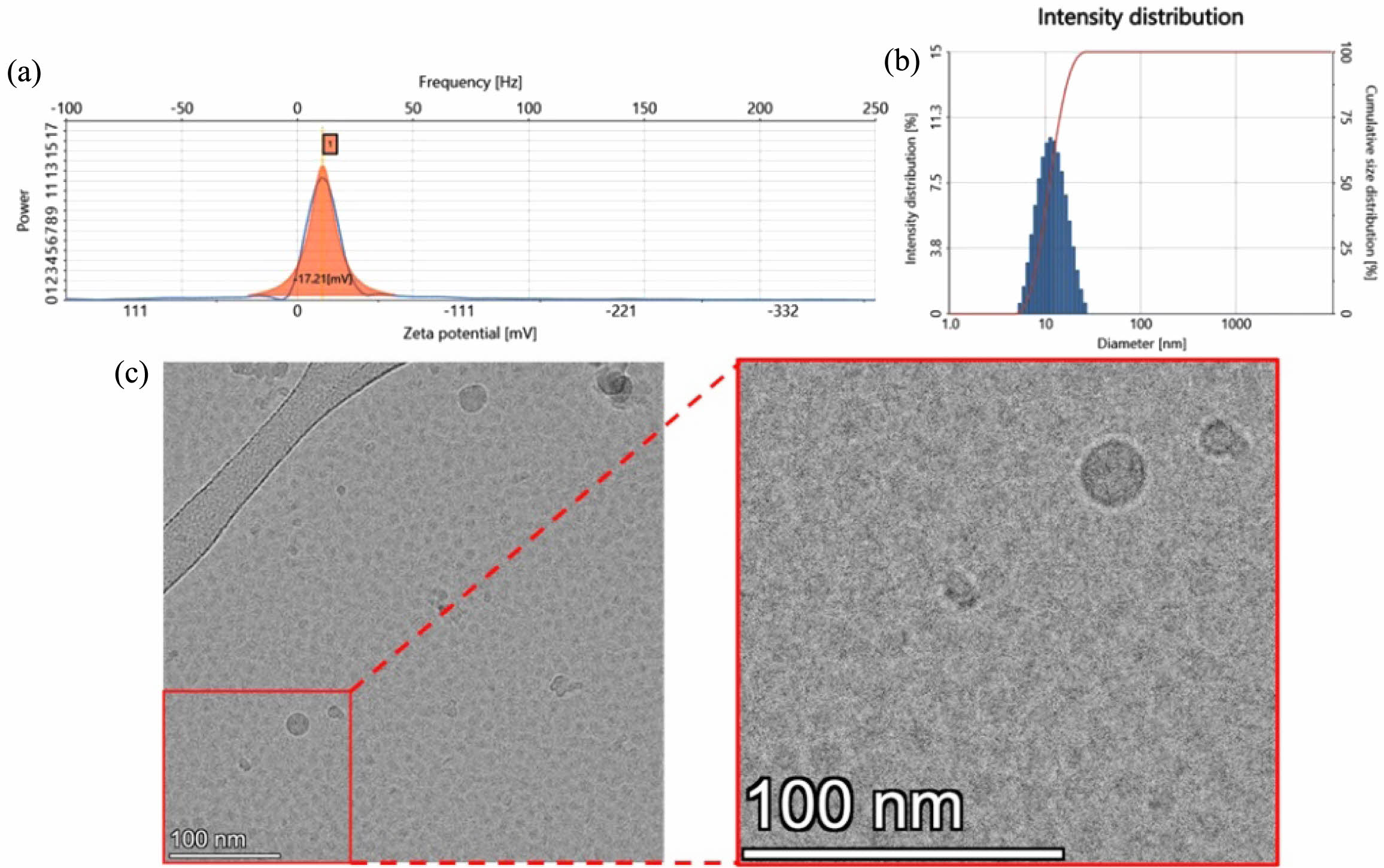
Nanoemulsion Characteristic Evaluation. The nanoemulsion was characterized by droplet size, polydispersity index (PDI), and zeta potential using dynamic light scattering (DLS) and its morphology was further examined via cryo-TEM. DLS analysis revealed that the nanoemulsion droplets had an average size of 12.1 nm (Figure 1(b)) with a PDI of 0.083, indicating a uniform size distribution. The zeta potential was measured at -17.7 mV (Figure 1(a)). These results suggest that nanoemulsion exhibits favorable size, stability, and surface charge properties suitable for drug delivery applications.
Cryo-TEM imaging further corroborated the DLS findings, with the micrographs (Figure 1(c)) confirming the small droplet size. Nanoemulsions with droplet sizes smaller than 20 nm are particularly effective for penetrating the skin's layers, enhancing drug delivery to the target site. Such small sizes facilitate passage through biological barriers and increase drug concentration in deeper skin layers.17
Additionally, the negative zeta potential of -17.7 mV contributes to the stability of the nanoemulsion by minimizing particle aggregation through electrostatic repulsion. This enhanced stability ensures the prolonged effectiveness of the drug delivery system, particularly in topical applications.18
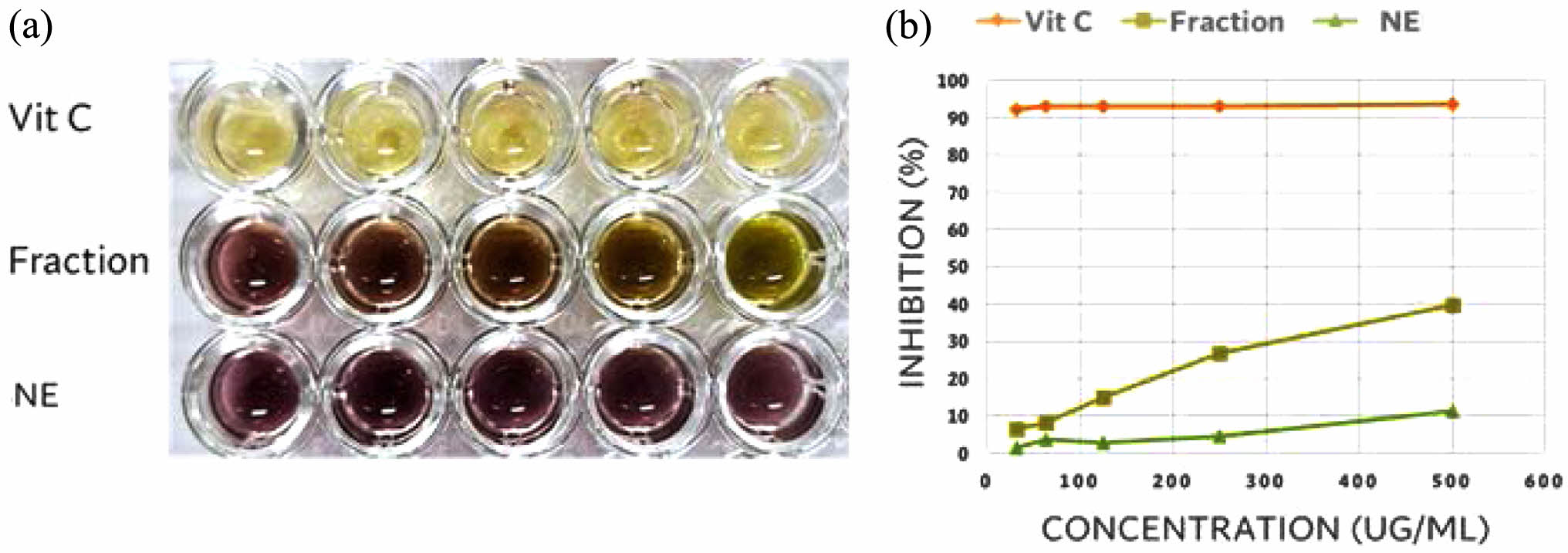
Antioxidant Activity. In this study, the antioxidant activity of the n-hexane fraction of parsley was evaluated using the DPPH radical scavenging assay. Three samples were tested: ascorbic acid (used as the standard), the n-hexane fraction of parsley, and the n-hexane parsley nanoemulsion. As shown in Figure 2(a), the radical scavenging activity of the n-hexane fraction was compared to ascorbic acid and its nanoemulsion formulation. The visual appearance of the reagent after mixing with each sample indicated strong antioxidant activity for ascorbic acid, with the DPPH solution turning completely yellow. The n-hexane fraction exhibited a concentration-dependent color change, reflecting moderate antioxidant activity, whereas the nanoemulsion showed no significant color change.
Quantitative analysis of % inhibition (Figure 2(b)) revealed that ascorbic acid demonstrated potent antioxidant activity, with inhibition exceeding 90% across all tested concentrations. Interestingly, the n-hexane fraction exhibited reduced antioxidant activity upon formulation into nanoemulsion. This reduction is likely due to the presence of surfactants and co-surfactants in the nanoemulsion system, which form a lipid membrane at the oil-water interface. This membrane may hinder the interaction between hydrophilic DPPH radicals in the aqueous phase and hydrophobic metabolites in the oil phase, thereby limiting the antioxidant potential of the nanoemulsion.19
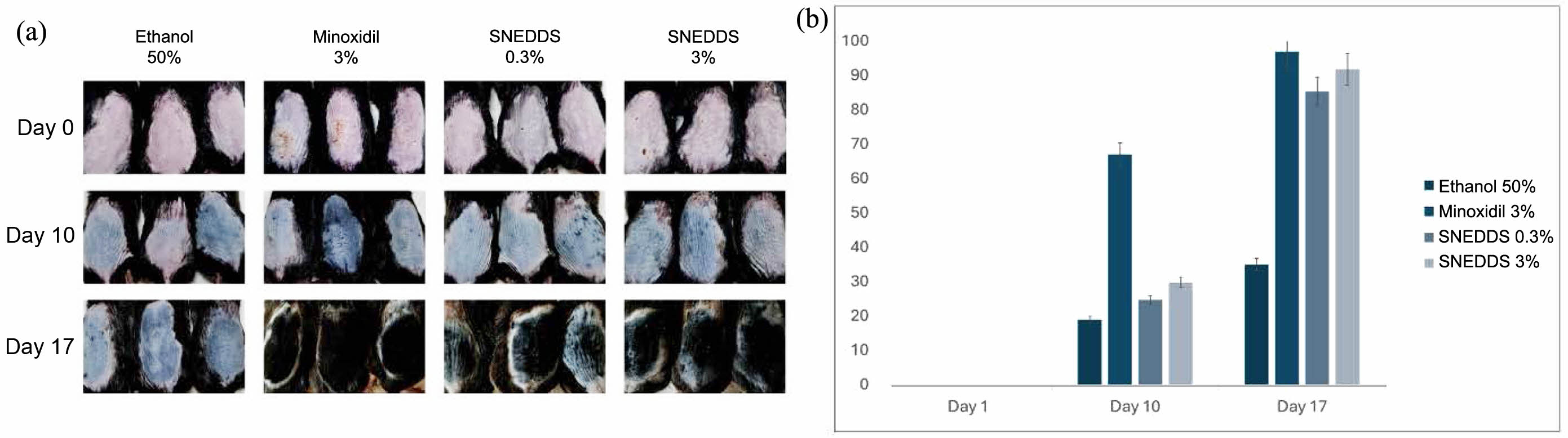
In vivo Hair Growth Study. Figure 3 along with the quantitative data, demonstrates the hair growth-promoting effects of the parsley-coconut oil-based SNEDDS formulation compared to 3% minoxidil and 50% ethanol. The results highlight the superior efficacy of both the 3% SNEDDS and 3% minoxidil in stimulating hair regrowth over the 17-day period.
At Day 10, the minoxidil group exhibited the highest hair growth percentage (66.972%), significantly outperforming the SNEDDS 0.3% (24.682%), SNEDDS 3% (29.810%), and the ethanol control (18.920%). This early-stage growth suggests that minoxidil acts rapidly inducing follicular activation. However, both SNEDDS formulations also show notable improvements compared to ethanol, indicating their potential for hair regrowth stimulation.
By Day 17, the 3% SNEDDS formulation (91.811%) achieves a hair growth percentage comparable to 3% minoxidil (96.826%), suggesting that SNEDDS could be an effective alternative treatment. The 0.3% SNEDDS (85.312%) also shows significant regrowth, outperforming the ethanol control group (34.971%), which exhibits minimal hair regeneration.
These findings indicate that the parsley-coconut oil-based SNEDDS formulation enhances hair growth, likely due to its improved bioavailability and penetration of active compounds into the hair follicles.18 The 3% SNEDDS shows hair growth effects nearly equivalent to minoxidil, suggesting its potential as a natural-based therapeutic alternative for alopecia treatment. Further investigations, including histological and molecular studies, are warranted to elucidate the underlying mechanisms of action and confirm its potential as an alternative topical treatment for hair loss.
The study evaluated the potential of a parsley-derived n-hexane fraction, formulated into a coconut oil-based nanoemulsion, for antioxidant activity and hair growth promotion. The nanoemulsion characterization demonstrated favorable properties for drug delivery systems. DLS analysis showed a droplet size of 12.1 nm with a low PDI of 0.083, indicating a uniform size distribution. The zeta potential was measured at -17.7 mV, reflecting good stability through electrostatic repulsion, which minimizes particle aggregation. Cryo-TEM imaging further confirmed the nanoscale droplet size and spherical morphology. These properties suggest that the nanoemulsion is stable and well-suited for topical application.
The antioxidant activity, assessed using the DPPH radical scavenging assay, showed that the n-hexane fraction exhibited moderate antioxidant activity compared to ascorbic acid. However, upon formulation into nanoemulsion, the antioxidant activity decreased, likely due to the surfactant system's lipid membrane, which impeded interaction between hydrophilic DPPH radicals and the fraction's active components.20
For hair growth promotion, the parsley-coconut oil nanoemulsion demonstrated promising results in a dose-dependent manner. The 3% nanoemulsion showed comparable efficacy to 3% minoxidil, with substantial hair regrowth observed by day 10 and nearly complete coverage by day 17. The 0.3% nanoemulsion also promoted hair regrowth but with less effectiveness compared to its higher concentration. The 50% ethanol control showed minimal hair regrowth, confirming the lack of inherent stimulatory activity in the absence of active ingredients.
These findings highlight the functionality of parsley-based nanoemulsion as a hair growth stimulant. The enhanced hair growth capacity of the nanoemulsion can be attributed to its nanoscale droplet size, which facilitates efficient penetration and targeted delivery of active metabolites to hair follicles. However, the reduction in antioxidant activity suggests that the formulation’s design could be further optimized to preserve bioactivity while maintaining stability and delivery efficacy. Overall, the parsley-coconut oil nanoemulsion, particularly at a 3% concentration, represents a promising natural alternative for hair growth treatments and holds significant potential for incorporation into topical formulations. Future research should focus on elucidating the molecular mechanisms underlying its hair growth-promoting effects, including gene expression analysis following treatment. Additionally, further investigations into skin irritation and inflammation responses will be crucial to assess its safety and suitability for long-term topical application.
|
Figure 1 Characterization of nanoemulsion: (a) zeta potential measurement; (b) particle size distribution analyzed by DLS; (c) morphological analysis via cryo-TEM. |
|
Figure 2 (a) Visual representation of DPPH free radical scavenging activity in a well plate: Ascorbic acid (standard antioxidant), n-hexane fraction of parsley, and n-hexane parsley nanoemulsion; (b) quantitative comparison of DPPH free radical scavenging activity (% inhibition) for all tested samples. |
|
Figure 3 In vivo study of the hair growth-promoting effects of the parsley-coconut oil nanoemulsion compared to 3% minoxidil (positive control) and 50% ethanol (negative control): (a) representative images showing hair regrowth at days 0, 10, and 17 for treatment groups: 50% ethanol, 3% minoxidil, 0.3% nanoemulsion, and 3% nanoemulsion; (b) quantitative analysis of hair growth percentage for each treatment group over time. |
In conclusion, the parsley-derived n-hexane fraction formulated into a coconut oil-based nanoemulsion demonstrates promising antioxidant and hair growth-promoting properties. The nanoemulsion's favorable characteristics, including its small droplet size and good stability, suggest it is well-suited for topical application. The nanoemulsion effectively promoted hair regrowth in a dose-dependent manner, with the 3% formulation showing results comparable to minoxidil. These findings support the potential of parsley-based nanoemulsions as a natural and effective treatment for hair growth, warranting further optimization for improved bioactivity and formulation stability.
- 1. Ma, X.; Tian, Y.; Song, Y.; Shi, J.; Xu, J.; Xiong, K.; Li, J.; Xu, W.; Zhao, Y.; Shuai, J. Msi2 Maintains Quiescent State of Hair Follicle Stem Cells by Directly Repressing the Hh Signaling Pathway. J. Invest. Dermatol. 2017, 137, 1015-1024.
-

- 2. Lin, X.; Zhu, L.; He, J. Morphogenesis, Growth Cycle and Molecular Regulation of Hair Follicles. Fronti. Cell Dev. Biol. 2022, 10, 899095.
-
- 3. Choi, N.; Shin, S.; Song, S. U.; Sung, J.-H. Minoxidil Promotes Hair Growth Through Stimulation of Growth Factor Release from Adipose-derived Stem Cells. Int. J. Mol. Sci. 2018, 19, 691.
-
- 4. Olsen, E. A.; Dunlap, F. E.; Funicella, T.; Koperski, J. A.; Swinehart, J. M.; Tschen, E. H.; Trancik, R. J. A Randomized Clinical Trial of 5% Topical Minoxidil Versus 2% Topical Minoxidil and Placebo in the Treatment of Androgenetic Alopecia in Men. J. Am. Acad. Dermatol. 2002, 47, 377-385.
-
- 5. Ajmera, P.; Kalani, S.; Sharma, L. Parsley-benefits & Side Effects on Health. Int. J. Physiol. Nutr. Phys. Edu. 2019, 4, 1236-1242.
- 6. Hasanuddin, S.; Gozali, D.; Arba, M.; Ramadhan, D. S. F.; Mustarichie, R. In Silico Prediction of Metabolite in Petroselinum Crispum in Inhibiting Androgen Receptor as Treatment for Alopecia. Res. J. Pharm. Technol. 2022, 15, 1211-1218.
-
- 7. Hasanuddin, S.; Gozali, D.; Arba, M.; Mustarichie, R.; Isrul, M. In Vivo and In Silico Evaluation of Petroselinum crispum Leaf Fractions as Anti-Alopecia. Tropical J. Nat. Prod. Res. 2024, 8 9537-9546.
-
- 8. Pineda, R.; Vizcaíno, S.; García, C. M.; Gil, J. H.; Durango, D. Antifungal Activity of Extracts, Essential Oil and Constituents from Petroselinum Crispum Against Colletotrichum Acutatum. Rev. Fac. Nac. Agron. Medellín 2018, 71, 8563-8572.
-
- 9. Munkhbayar, S.; Jang, S.; Cho, A.-R.; Choi, S.-J.; Shin, C. Y.; Eun, H. C.; Kim, K. H.; Kwon, O. Role of Arachidonic Acid in Promoting Hair Growth. Ann. Dermatol. 2016, 28, 55-64.
-
- 10. Baky, M. H.; El-Taher, E. M.; Naggar, D. M. E.; Abouelela, M. B. Phytochemical Investigation of the n-hexane-extracted Oil From Four Umbelliferous Vegetables Using GC/MS Analysis in the Context of Antibacterial Activity. Sci. Rep. 2024, 14, 10592.
-
- 11. Wallace, T. C. Health Effects of Coconut Oil—A Narrative Review of Current Evidence. J. Am. Coll. Nutr.2019, 38, 97-107.
- 12. Dulal, M. S. R.; Sheikh, H.; Taher, M. A.; Rahaman, M. S. U.; Rahman, Z.; Malek, M. Formulation and Finding Out the Efficacy of the Herbal Hair Oil Over Simple Coconut Oil (purified)-A Formulation and Clinical Study in Bangladesh. Int. J. Pharm. Sci. Res. 2014, 5, 1801.
- 13. Esclapez, M.; García-Pérez, J. V.; Mulet, A.; Cárcel, J. Ultrasound-assisted Extraction of Natural Products. Food Eng. Rev. 2011, 3, 108-120.
-
- 14. Shafazila, T. S., Lee, P. M., Hung, L. K., In Radical Scavenging Activities of Extract and Solvent-Solvent Partition Fractions from Dendrobium Sonia “Red Bom” Flower; Proceedings of the 2010 International Conference on Science and Social Research (CSSR 2010); Kuala Lumpur, Malaysia, December 5–7, 2010; IEEE: New York, 2010, pp. 762-765.
-
- 15. Rahman, M. M.; Islam, M. B.; Biswas, M.; Khurshid Alam, A. In vitro Antioxidant and Free Radical Scavenging Activity of Different Parts of Tabebuia Pallida Growing in Bangladesh. BMC Res. Not. 2015, 8, 621.
-
- 16. Kwack, M. H.; Kim, M. K.; Kim, J. C.; Sung, Y. K. Dickkopf 1 Promotes Regression of Hair Follicles. J. Invest. Dermatol. 2012, 132, 1554-1560.
-
- 17. Goyal, R.; Macri, L. K.; Kaplan, H. M.; Kohn, J. Nanoparticles and Nanofibers for Topical Drug Delivery. J. Controll. Release 2016, 240, 77-92.
-
- 18. Raina, N.; Rani, R.; Thakur, V. K.; Gupta, M. New Insights in Topical Drug Delivery for Skin Disorders: from a Nanotechnological Perspective. ACS Omega 2023, 8, 19145-19167.
-
- 19. Lee, S. M.; Choi, M. J.; Lee, Y. M.; Jin, B. S. Preparation and Characterization of Ethosome Containing Hydrophobic Flavonoid Luteolin. Appl. Chem. Eng. 2010, 21, 40-45.
- 20. Shin, K.; Choi, H.; Song, S. K.; Yu, J. W.; Lee, J. Y.; Choi, E. J.; Lee, D. H.; Do, S. H.; Kim, J. W. Nanoemulsion Vehicles as Carriers for Follicular Delivery of Luteolin. ACS Biomater. Sci. Eng. 2018, 4, 1723-1729.
-
- Polymer(Korea) 폴리머
- Frequency : Bimonthly(odd)
ISSN 2234-8077(Online)
Abbr. Polym. Korea - 2025 Impact Factor : 1.0
- Indexed in SCIE
 This Article
-
2025; 49(5): 564-569
Published online Sep 25, 2025
- 10.7317/pk.2025.49.5.564
- Received on Jan 21, 2025
- Revised on Apr 11, 2025
- Accepted on Apr 11, 2025
Services
- Full Text PDF
- Abstract
- ToC
- Acknowledgements
- Conflict of Interest
Introduction
Experimental
Results and Discussion
Conclusions
- References
Shared
Correspondence to
- Yong-kyu Lee
-
*Department of Chemical & Biological Engineering, Korea National University of Transportation, Chungju 27470, Korea
**4D Convergence Technology Institute, Korea National University of Transportation, Jeungpyeong 27909, Korea - E-mail: leeyk@ut.ac.kr
- ORCID:
0000-0001-8336-3592
 Copyright(c) The Polymer Society of Korea. All right reserved.
Hyecheon Building(Room 601), #354, Gangnam-Daero, Gangnam-Gu, Seoul 06242, Korea
TEL : 82-2-568-3860, 561-5203, 569-3860 FAX : 82-2553-6938 E-mail: polymer@polymer.or.kr