







- Study on Polyethylene Glycol-800-Modified Natural Rubber Latex Composites via Microwave Drying
Xiaozheng Wang*, Ziyang Wang*, Haiqing Zhou*, Mingchao Wang***, Chuansheng Wang*,**, and Huiguang Bian*,**,†

*School of Mechatronics Engineering, Qingdao University of Science and Technology, Shandong, 266061, China
**National Engineering Laboratory of Advanced Tire Equipment and Key Materials,
Qingdao University of Science and Technology, Qingdao, Shandong Province, 266061, China
***National Key Laboratory of Aerospace Chemical Power, Hubei Institute of Aerospace Chemotechnology, Xiangyang 441003, China- 마이크로파 건조를 이용한 폴리에틸렌글리콜-800 개질 천연고무 라텍스 복합재료에 관한 연구
Reproduction, stored in a retrieval system, or transmitted in any form of any part of this publication is permitted only by written permission from the Polymer Society of Korea.
A combined processing strategy was developed by incorporating polyethylene glycol (PEG-800) into natural rubber latex, followed by microwave drying. The main advantage of this strategy is that it simultaneously improves the homogeneity of the PEG-containing natural rubber (NR) precursor and enables filler-specific interfacial regulation, thereby achieving a better balance among filler dispersion, curing behavior, mechanical reinforcement, and dynamic performance. Microwave drying promoted more uniform dehydration and improved subsequent vulcanization, while PEG-800 further regulated the filler–rubber interface. In the silica/NR composites, 0.5-1 phr PEG-800 improved the overall properties. Compared with the conventionally dried silica/NR control, the composite containing 1 phr PEG-800 exhibited increases of 17.7% and 12.1% in tensile strength and wet-skid-related indicator (tan δ at 0 °C) while reducing DIN abrasion volume loss by 15.9%. However, increasing the PEG-800 loading to 2 phr caused increased filler agglomeration and deterioration in curing and high-temperature dynamic performance. Therefore, 0.5-1 phr was identified as the effective loading range for the silica/NR composites, and 1 phr was selected as the overall optimum. In contrast, the carbon black (CB)/NR composites exhibited a more gradual response to PEG-800. Compared with the conventionally dried CB/NR control, the composite containing 2 phr PEG-800 increased tensile strength by 20.2%, reduced abrasion volume loss by 7.82%, and decreased rolling-resistance indicator (tan δ at 60 °C) by 42.8%, but its elongation at break and hardness decreased compared with the 1 phr formulation. Considering the overall balance of filler dispersion, mechanical properties, and dynamic performance, 1 phr PEG-800 was selected as the optimum loading for the CB/NR composites.
A composite modification strategy combining polyethylene glycol (PEG)-800 incorporation in the latex phase with microwave drying is proposed for natural rubber composites with silica or carbon black. The effects on filler dispersion, interfacial structure, and macroscopic properties are systematically investigated to optimize PEG-800 dosage. The interfacial regulation mechanism and combined effect with microwave drying are elucidated, providing guidance for high-performance rubber materials.
Keywords: microwave drying, polyethylene glycol, natural rubber composites, silica dispersion, carbon black dispersion.
This is supported by National Natural Science Foundation of China (Grant number: 52173101) and Natural Science Foundation of Shandong Province (Grant number: ZR2020KE037).
The authors declare that there is no conflict of interest.
Natural rubber (NR) is primarily composed of cis-1,4-polyisoprene as the main chain, and naturally coexists with non-rubber components such as proteins, phospholipids, inorganic salts, and fatty acids, endowing it with excellent elasticity as well as certain interfacial activity and processing sensitivity.1
NR is widely used in daily life, and in the automotive and aerospace industries. However, a major problem in the application of rubber composites is the poor compatibility between the non-polar NR chains and polar fillers, which leads to processing difficulties.2,3
Moreover, the strong hydrogen bonds between silica particles and the van der Waals forces in carbon black also result in insufficient dispersion within the rubber matrix, causing agglomeration and failing to meet the performance requirements of rubber composites.4,5
Recent studies have demonstrated that filler dispersion and interfacial structure in rubber composites can be regulated through both interfacial modification and processing optimization. Wang et al.6 introduced an amino-functionalized polysulfide into NR/carbon black (CB) composites to establish a molecular bridge between CB and rubber chains, thereby improving filler dispersion and interfacial adhesion while reducing hysteresis loss. Phumnok et al.7 used computational fluid dynamics to demonstrate that impeller configuration and processing scale strongly influence silica dispersion during natural-rubber-latex mixing. Bera et al.8 pretreated natural rubber latex with sorbitol and showed that regulation of the latex precursor before filler incorporation could improve subsequent silica dispersion and dynamic performance. In addition, Mathew et al.9 reviewed recent natural-rubber drying technologies and highlighted microwave drying as a promising method for rapid moisture removal and reduced energy consumption. They also emphasized that microwave power, drying time, moisture content, and temperature must be carefully optimized because these parameters can affect drying uniformity and the final properties of natural rubber. These findings indicate that the performance of rubber composites depends not only on the interfacial modifier itself but also on the processing history of the rubber precursor and the conditions used for filler incorporation and subsequent network formation. However, latex-phase interfacial modification and microwave drying have generally been investigated separately. The effects of pre-incorporating PEG-800 into natural rubber latex followed by microwave drying have not been sufficiently clarified, particularly for silica and carbon black fillers with distinctly different surface characteristics. Zhao et al. employed a latex mixing method, a green and facile process, to solve the problem of uniform dispersion of polar graphene oxide (GO) in non-polar NR. Through atomic force microscopy, X-ray diffraction, and transmission electron microscopy, they successfully confirmed that GO is uniformly dispersed in the NR matrix in the form of single layers, validating the effectiveness of the latex mixing method.10 Bo et al. utilized a γ-ray irradiation technique to successfully graft two representative monomers onto the surface of carbon black, aiming to overcome its inherent defects of easy agglomeration and poor dispersion, thereby opening up a novel, green, and efficient pathway for the preparation of high-performance, easily-dispersible carbon black materials.11 Li compared the effects of modifying SiO2 with PEGs of different molecular weights to reduce the dosage of Si69. The results showed that the molecular weight of PEG-800 provided the best overall effect, and it could also reduce the dosage of Si69 and volatile organic compounds (VOCs) emissions.12 Therefore, a PEG reagent with a molecular weight of 800 was adopted in this experiment. Xu adopted a two-stage mixing process to complete the silanization first, followed by the addition of PEG-400. It was concluded that PEG-400 could simultaneously improve the wet skid resistance, rolling resistance, and wear resistance of silica/silane rubber composites, breaking the mutual constraints of the “magic triangle.”13 Hu used the mass fractal model and the gel network model to extract the size of the occluded rubber for the first time, concluding that the hydrogen bond-induced aggregation of PEG-2000 increased the occluded rubber, promoting filler aggregation and occluded rubber formation.14 Addressing the issue that pristine clay is incompatible with NR and cannot be nano-dispersed, J. Carretero proposed using PEG-5000 as a swelling/dispersing agent added in one step without organic pretreatment. It was concluded that PEG, as a multifunctional interface regulator, simultaneously plays the roles of intercalation aid, vulcanization accelerator, and competitive adsorbent.15
Kim et al. investigated silica/clay composites, in which accelerator adsorption can lead to insufficient crosslinking, and examined the effect of PEG on bound rubber in the presence of carbon black.16
Building upon these premises, this study proposes a composite modification strategy by incorporating PEG-800 into the latex phase followed by microwave drying. PEG is generally regarded as a modifier that can significantly improve the dispersion of polar fillers in a non-polar rubber matrix.17-19 Compared with conventional hot-air or vacuum drying, the microwave drying process can endow the rubber with better network structures in both the raw and vulcanized states.9,20-24
A systematic investigation was conducted to evaluate the effects of this method on filler dispersion, interfacial structure, and macroscopic properties of PEG-800/silica/NR composites and PEG-800/CB/NR composites, aiming to determine the optimal dosage of PEG-800. Through a comparative analysis of vulcanization characteristics, mechanical properties, dynamic mechanical behavior, and microscopic morphology, the interfacial regulation mechanism of PEG-800 within different filler composites and its combined effect with microwave drying were elucidated. Compared to existing research in which PEG was primarily introduced during conventional compounding or after silanization, the present study pre-incorporates PEG-800 into natural rubber latex and couples this step with microwave drying before filler compounding. This work provides technical guidance for the fabrication of high-performance rubber materials.
Materials. In this study, natural rubber latex (NRL, solids content 60 wt%) was supplied by Hainan Natural Rubber Industry Group Co., Ltd. (Hainan, China). Silica (SiO2, grade 1165MP, specific surface area 165 m2·g⁻1, density 2.06 g·cm⁻3) was purchased from Solvay Silica Co., Ltd. (Qingdao, China). Carbon black (N660) and polyethylene glycol (PEG-800) were provided by Wuxi Yatai United Chemical Co., Ltd. (Wuxi, China). The silane coupling agent Si69, zinc oxide (ZnO), stearic acid (SAD), accelerators DPG and CZ, antioxidant 4020, and sulfur were all commercially available industrial-grade products and were used as received.
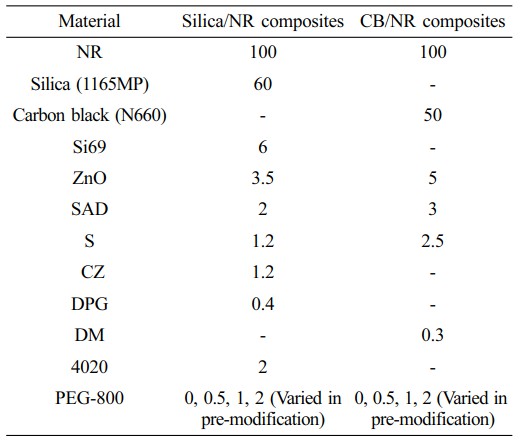
Formulation. In this study, natural rubber composites were prepared using a microwave drying process, with the PEG-800 loading as the primary variable. The base formulation of the CB/NR composites consisted of 100 parts of microwave-dried natural rubber, 50 parts of N660 carbon black, 5 parts of ZnO, 3 parts of SA, 0.3 parts of DM, and 2.5 parts of S. Sample 0, prepared by conventional drying without PEG-800, was used as the control and denoted as CB-CD. Sample 1 was prepared via microwave drying without PEG-800 and denoted as CB-MD. Samples 2–4 were prepared by incorporating 0.5, 1, and 2 phr of PEG-800 into microwave-dried natural rubber and were denoted as CB-MD-0.5 phr, CB-MD-1 phr, and CB-MD-2 phr, respectively. The base formulation of the silica/NR composites consisted of 100 parts of microwave-dried natural rubber, 60 parts of 1165 MP silica, 6 parts of Si69, 3.5 parts of ZnO, 2 parts of SA, 1.2 parts of S, 1.2 parts of CZ, and 0.4 parts of DPG.Sample 0, prepared by conventional drying without PEG-800, was used as the control and denoted as Sil-CD. Sample 1 was prepared via microwave drying without PEG-800 and denoted as Sil-MD. Samples 2–4 were prepared by incorporating 0.5, 1, and 2 phr of PEG-800 into microwave-dried natural rubber and were denoted as Sil-MD-0.5 phr, Sil-MD-1 phr, and Sil-MD-2 phr, respectively.
The detailed formulations are summarized in Table 1.
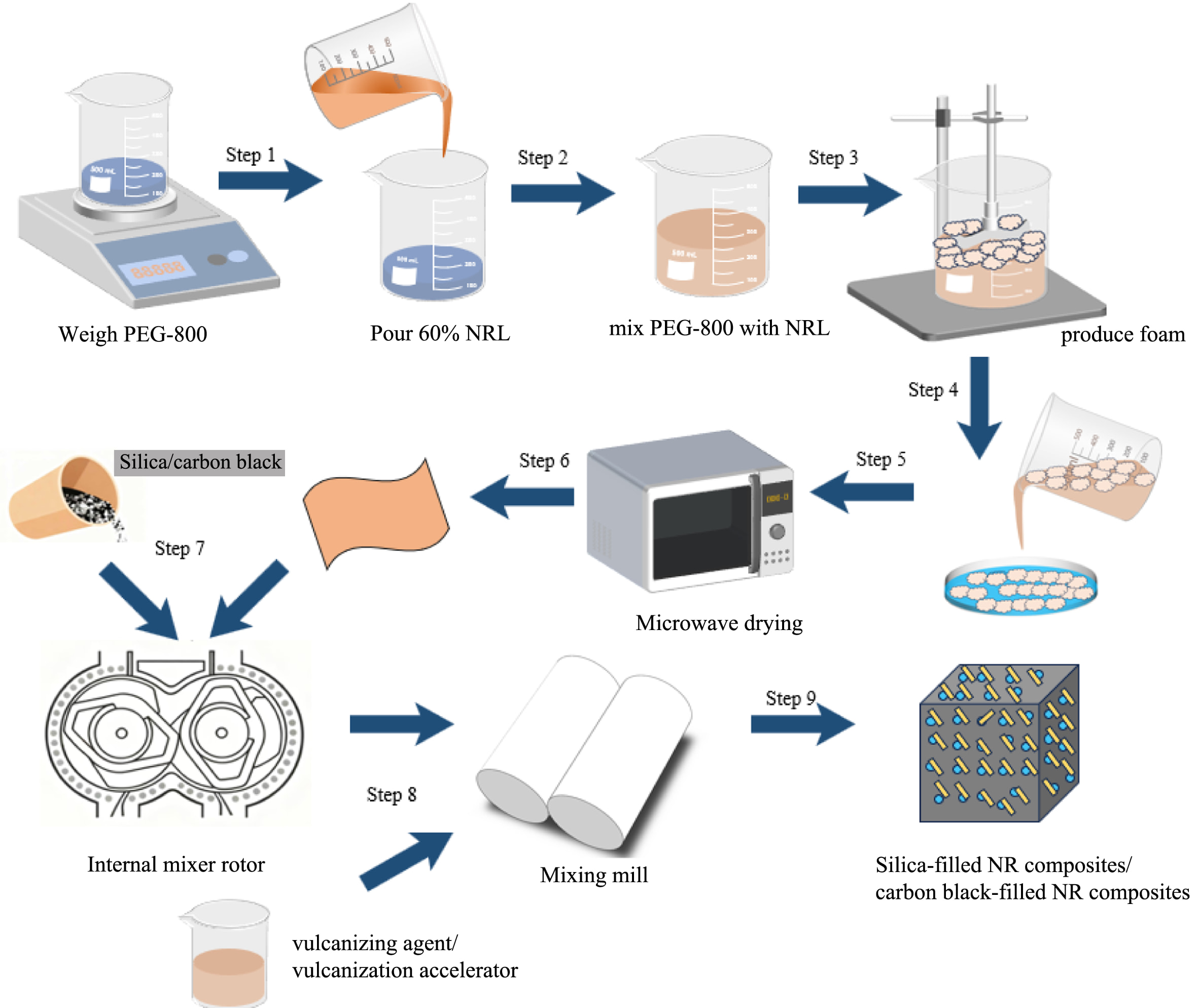
Sample Preparation. Figure 1 shows a schematic illustration of the preparation procedure. Mixing: According to the formulation, the required amount of PEG-800 was added to natural rubber latex (NRL, 60 wt% solids). The mixture was stirred at a constant speed for 3 min using a mechanical stirrer to ensure homogeneous dispersion of PEG-800 in the latex until a fine and stable foam formed on the surface. The control sample (P0) was prepared without PEG-800, while all other procedures remained identical.
Sampling and microwave drying: The foamed latex mixture was uniformly spread on a stainless-steel tray to form a layer with a thickness of 2–3 mm. Microwave drying was performed at a nominal output power of 700 W for a total irradiation time of 7 min. The sample was turned once during the drying process to improve heating uniformity. The residual moisture content was measured using a moisture analyzer (SYP1015-III, Shanghai Shenkai, China), and the final moisture content was controlled below 1.5 wt%. The resulting material was denoted as the PEG-800-containing natural rubber precursor.
Compounding: The modified natural rubber was first charged into an internal mixer (X(S)M-1.7L, Qingdao Yilang Rubber Equipment Co., Ltd., Qingdao, China), and the ram was lowered to seal the feed port for an initial mixing period of 50 s. Subsequently, N660 carbon black, SA, ZnO, and other additives were added. Any carbon black discharged from the mixing chamber during feeding was collected and returned to the mixer. The compounds were mixed for a total of 6.50 min. After mixing, the compound was discharged from the mixer at approximately 145 °C. Finally, the compound was sheeted on a two-roll mill (X(S)K-160, Wuxi Shuangxiang Rubber & Plastic Machinery Co., Ltd., Wuxi, China), and sulfur together with accelerator DM was incorporated by repeated sheeting and folding (triangular packing) to obtain a homogeneous rubber compound.
Characterization. Mooney Viscosity and Vulcanization Characteristics: The Mooney viscosity was measured using a Mooney viscometer (PREMIER MV, Alpha Corporation, Akron, USA) in accordance with ISO 289-1:2014. The test was conducted at 100 °C for 4 min with a preheating time of 1 min. The curing characteristics of the rubber compounds were evaluated using a moving-die rheometer (MDR-C, Alpha Corporation, Akron, USA) following ISO 6502-2:2018, with the test temperature set at 150 °C.
Mechanical Properties: The hardness of the vulcanized rubber was determined using a Shore hardness tester (H17A/1, Wallace, Surrey, UK) in accordance with ISO 7619-2:2004. The tensile properties of the vulcanized rubber were measured using a universal testing machine (Instron 3365, Instron, Norwood, USA) following ISO 37:2005.
DIN Abrasion: The abrasion resistance of the rubber compounds was evaluated using a DIN abrasion tester (SS-5643-D, Songshu Testing Instruments Co., Ltd., Dongguan, China) in accordance with GB/T 9867-1988.
Scanning Electron Microscopy (SEM): The microstructural morphology of the rubber composites was observed using a scanning electron microscope (SEM, SU 8000, Hitachi, Tokyo, Japan). The rubber samples were first cryo-fractured in liquid nitrogen to obtain brittle fracture surfaces. To ensure stable observation conditions, the fractured samples were conditioned at 80 °C for 24 h. The fracture surfaces were then mounted on sample holders and sputter-coated with a thin gold layer prior to SEM observation.
Fourier Transform Infrared Spectroscopy (FTIR): The silica/NR and CB/NR composite samples were thoroughly mixed with potassium bromide (KBr), ground uniformly, and pressed into transparent pellets. FTIR spectra were recorded using an FTIR spectrometer (Nicolet iS50, Thermo Fisher Scientific, Waltham, USA). Each spectrum was collected with 16 scans at a resolution of 8 cm-1 over a wavenumber range of 400–4000 cm-1.
Dynamic Mechanical Analysis (DMA): Dynamic mechanical properties were measured using a dynamic mechanical analyzer (EPLEXOR 150N, Netzsch, Selb, Germany). The test conditions were as follows: dynamic force of 60 N, dynamic strain of 0.25%, static force of 70 N, static strain of 5%, heating rate of 2 °C·min-1 or 2 °C/min, temperature range from −65 to 65 °C, and a test frequency of 10 Hz.
Payne Effect: The Payne effect of the rubber compounds was evaluated using a rubber process analyzer (RPA2000, Alpha Corporation, Akron, USA). The measurements were conducted at 60 °C with a frequency of 0.01 Hz, and the strain amplitude was swept from 0.28% to 40%.
Cut Resistance
: Specimens were tested using a cutting-resistance testing machine (SS-5681, Qingdao Hainuotaike Testing Instrument Co., Ltd., Qingdao, China) under a fixed load of 5 kg, and the cut-resistance index was calculated based on mass loss.
Silica/Carbon Black Dispersion: The vulcanized rubber was cut with a knife, and the cut surface was placed flat against the observation window of the dispersion analyzer (DisperGraderαview HR, Alpha Corporation, Akron, USA). The dispersion calculation threshold was 23 μm, and the exposure time was 40 ms.
Statistical Analysis: Tensile properties, hardness, rebound resilience, DIN abrasion resistance and Mooney viscosity were measured using three independent specimens, and the results are reported as the mean ± standard deviation. The DMA and rubber process analysis (RPA) results are presented as representative curves obtained under identical testing conditions; therefore, error bars are not shown for these curves.
|
Figure 1 Schematic illustration of the preparation process of modified natural rubber. |
Mechanism of Microwave Drying and PEG Interaction
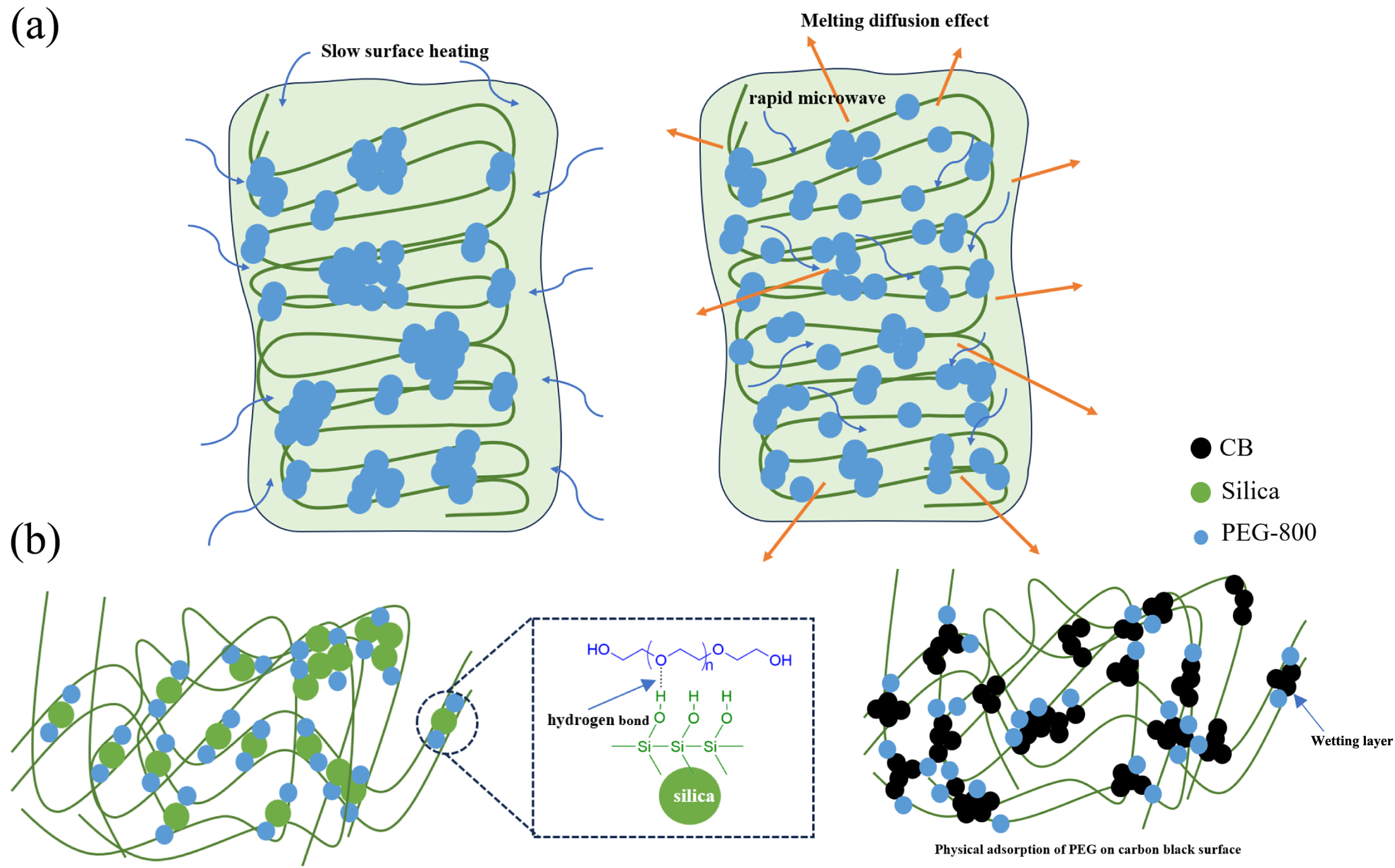
. Figure 2(a) shows a schematic illustration of microwave drying and the melting–diffusion behavior of PEG under microwave irradiation. Figure 2(b) shows the interfacial interaction mechanisms of PEG with rubber molecular chains in silica- and carbon black-filled rubber composites. Microwave drying enables selective volumetric heating of polar components in the system, such as water, non-rubber constituents, and PEG molecules, through interaction with the electromagnetic field, thereby realizing a rapid and uniform dehydration process from the interior to the exterior. Therefore, the primary role of microwave drying was to regulate the dehydration and structural evolution of the PEG-containing natural rubber precursor. Compared with conventional drying, microwave drying promoted volumetric heating and rapid moisture removal under the applied conditions during dehydration. In addition, the rapid removal of water helps preserve the distribution of non-rubber components, providing a more homogeneous initial microstructural environment for subsequent filler dispersion and crosslinking reactions. As a result, microwave drying not only shortens the drying time but also markedly improves the structural uniformity and network stability of filler–rubber systems.
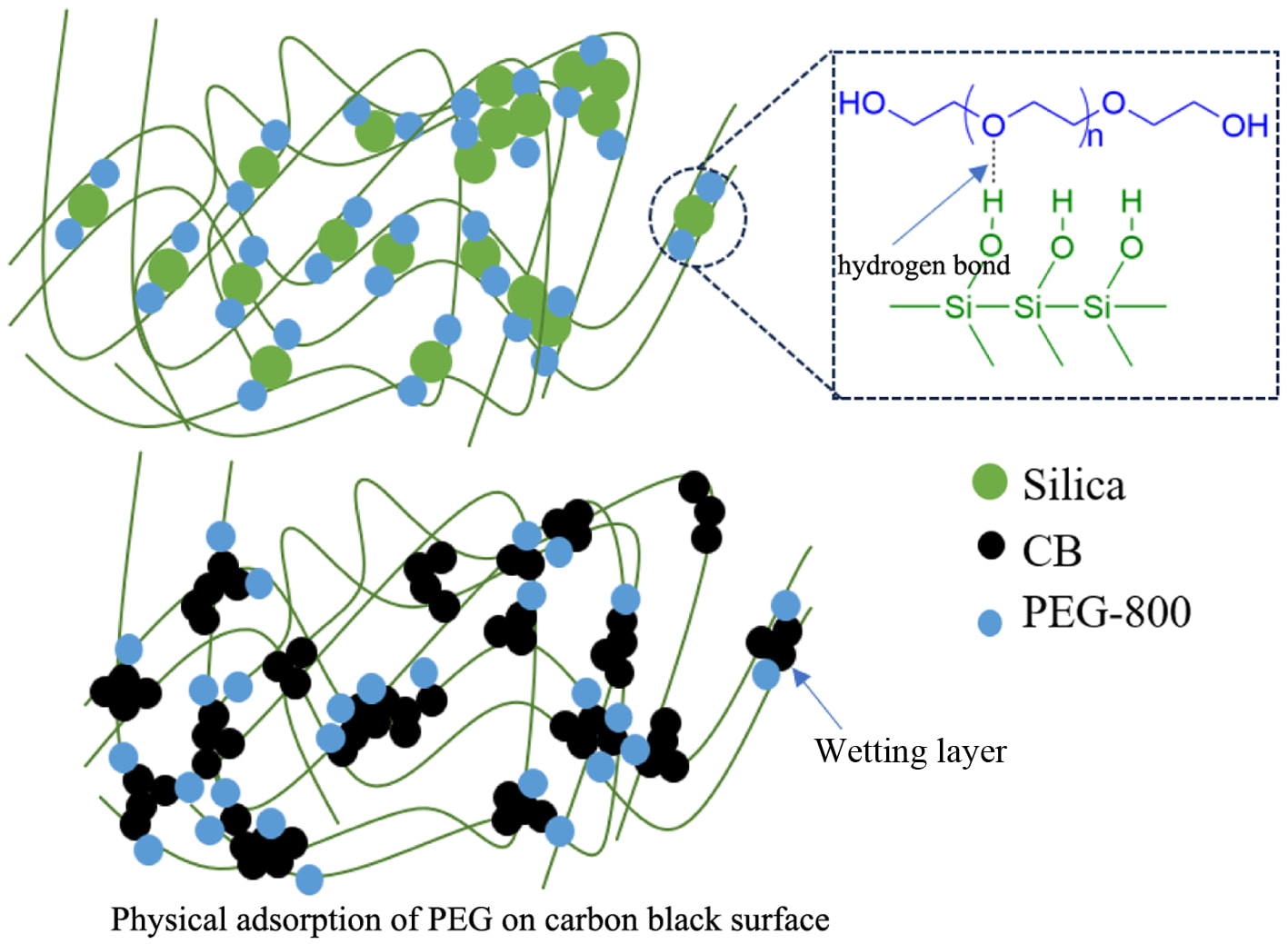
The principal role of PEG-800 is associated with interfacial regulation during the subsequent compounding of the dried natural rubber precursor with the fillers. In the silica/NR composites, the ether oxygen atoms and terminal hydroxyl groups of PEG-800 can interact with surface silanol groups through hydrogen bonding. Such interactions compete with the hydrogen-bonding association between adjacent silica particles, thereby weakening silica–silica interactions and improving the wetting of silica by the rubber matrix. At an appropriate PEG-800 loading, this interfacial regulation facilitates filler dispersion and promotes the formation of a more homogeneous filler–rubber network. However, excessive PEG-800 may partially cover the silica surface or interfere with the interfacial reaction between silica and Si69. This competitive adsorption or shielding effect may reduce the efficiency of silane-mediated coupling, resulting in increased filler agglomeration and deterioration of the effective crosslink network.
In the CB/NR composites, the interfacial-regulation mechanism of PEG-800 differs from that in the silica-filled system. Because carbon black contains a considerably lower concentration of strongly hydrogen-bonding surface groups than silica, PEG-800 is expected to interact with carbon black mainly through physical adsorption, surface wetting, and weak interactions with oxygen-containing functional groups on the carbon-black surface. The adsorbed PEG chains may form a flexible interfacial layer that improves the compatibility between carbon black and the natural rubber matrix and reduces the tendency of carbon-black aggregates to re-agglomerate during mixing. Accordingly, the effect of PEG-800 in the CB/NR system is dominated by physical interfacial regulation rather than by the strong hydrogen-bond-mediated interaction observed in the silica/NR system.
The combined effect of microwave drying and PEG-800 can therefore be described as a sequential processing–interface coupling effect. Microwave drying first regulates the dehydration history and distribution state of PEG-800 within the natural rubber precursor. During subsequent compounding, PEG-800 then migrates or redistributes toward the newly formed filler–rubber interfacial regions and regulates filler–filler and filler–rubber interactions. This sequential process can facilitate filler wetting and dispersion, modify the filler network, and influence the formation of the vulcanized network. The improvements observed in filler dispersion, fracture morphology, curing behavior, mechanical properties, and dynamic-mechanical performance are consistent with this proposed mechanism.
Fourier Transform Infrared Spectroscopy (FTIR)
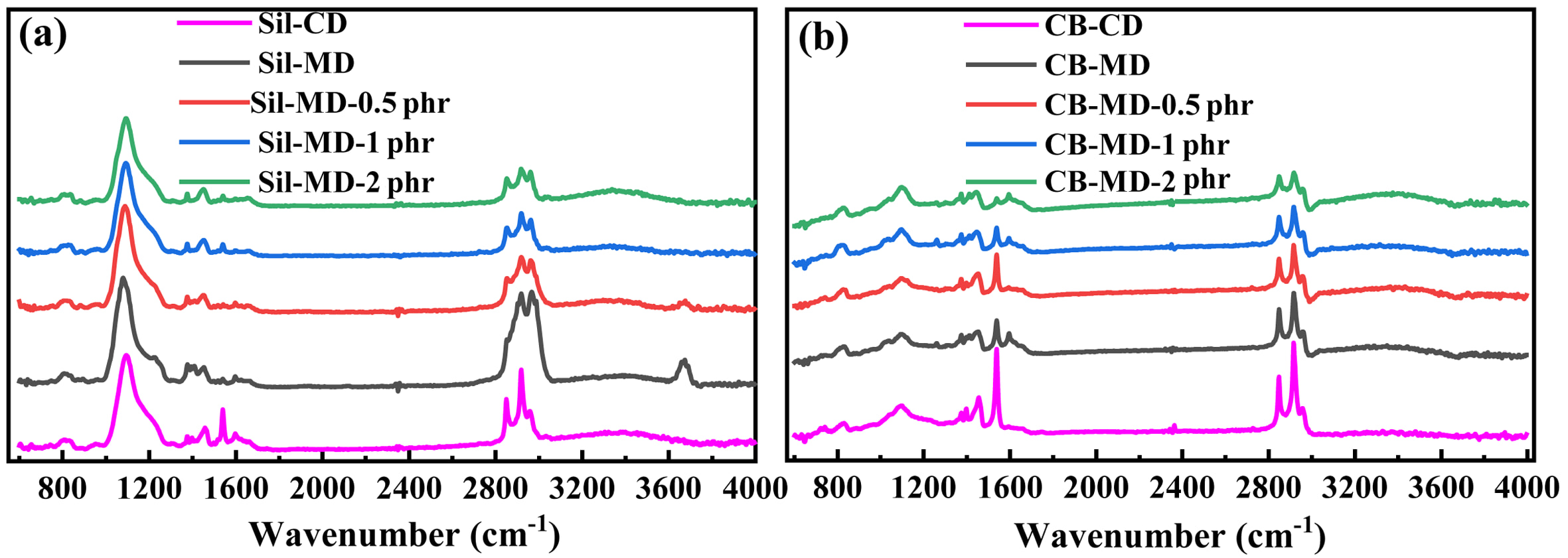
. Figures 3(a) and 3(b) present the FTIR spectra of the silica/NR composites and CB/NR composites, respectively. In both composites, the major characteristic absorption bands appear at similar wavenumbers, indicating that neither microwave drying nor the incorporation of PEG-800 induces the formation of new chemical bonds. The spectral differences are mainly reflected in changes in band intensity and band shape at several sensitive regions, which are associated with variations in residual moisture state, hydrogen-bonding interactions, and filler–rubber interfacial structures caused by the drying method and PEG-800 addition. Although no new characteristic absorption bands were observed, FTIR alone cannot exclude subtle changes in molecular weight or limited chain scission during microwave treatment.
The FTIR spectra of the silica/NR composites are shown in Figure 3(a). The broad absorption band in the range of 3000–3650 cm–1 is attributed to O–H stretching vibrations associated with hydrogen bonding. The broad peak centered at approximately 3450 cm–1 corresponds to hydrogen-bonded silanol groups, while the sharper band near 3650 cm–1 is assigned to free silanol groups. Upon microwave drying, the bands in the 3200–3600 cm–1 region become narrower with reduced intensity, indicating that volumetric heating and selective coupling of microwaves with polar water molecules effectively remove adsorbed and bound water and alter the proportion of hydrogen-bonded silanol species on the silica surface. With increasing PEG-800 content, the intensity of the band near 3650 cm–1 gradually decreases, indicating a change in the state of relatively free silanol groups on the silica surface. Meanwhile, the enhanced –CH2– stretching bands at approximately 2920 and 2850 cm–1 confirm the incorporation of PEG-800. The simultaneous decrease in the free-silanol-related band and increase in the PEG-related bands are consistent with hydrogen-bonding interactions between PEG-800 and surface Si–OH groups, which may weaken silica–silica interactions and improve interfacial wetting. Since no new characteristic absorption band appears, this interaction is considered predominantly non-covalent rather than chemical grafting. In addition, compared with the conventional drying control group and microwave-dried samples, the intensities of the –CH2– stretching bands at approximately 2920 and 2850 cm–1 progressively increase with PEG-800 addition. These bands are assigned to the asymmetric and symmetric C–H stretching vibrations of methylene groups in PEG. This observation confirms the successful incorporation of PEG-800 into the system and its participation in interfacial structure formation.
The FTIR spectra of the CB/NR composites are shown in Figure 3(b). As the PEG-800 content increases, absorption bands in the 1000–1150 cm–1 region gradually emerge and intensify, which can be attributed to the stretching vibrations of ether linkages in PEG. Meanwhile, the –CH2– stretching bands at approximately 2850 and 2920 cm–1 show a monotonic increase in intensity with increasing PEG-800 content, indicating a higher PEG fraction in the composite and a greater tendency for PEG to form a continuous organic adsorption layer on the carbon black surface. Owing to the absence of a high density of strongly hydrogen-bonding functional groups on carbon black, PEG-800 mainly interacts with carbon black through physical adsorption rather than specific chemical interactions. The gradual enhancement of the C–O–C absorption bands in the 1000–1150 cm–1 region and the –CH2– stretching bands at approximately 2920 and 2850 cm–1 confirms the incorporation of PEG-800 into the CB/NR composites. However, no new characteristic absorption band is observed. Therefore, the FTIR results, together with the SEM morphology discussed below, support an interfacial mechanism dominated by physical adsorption and surface wetting rather than the formation of new chemical bonds.
SEM
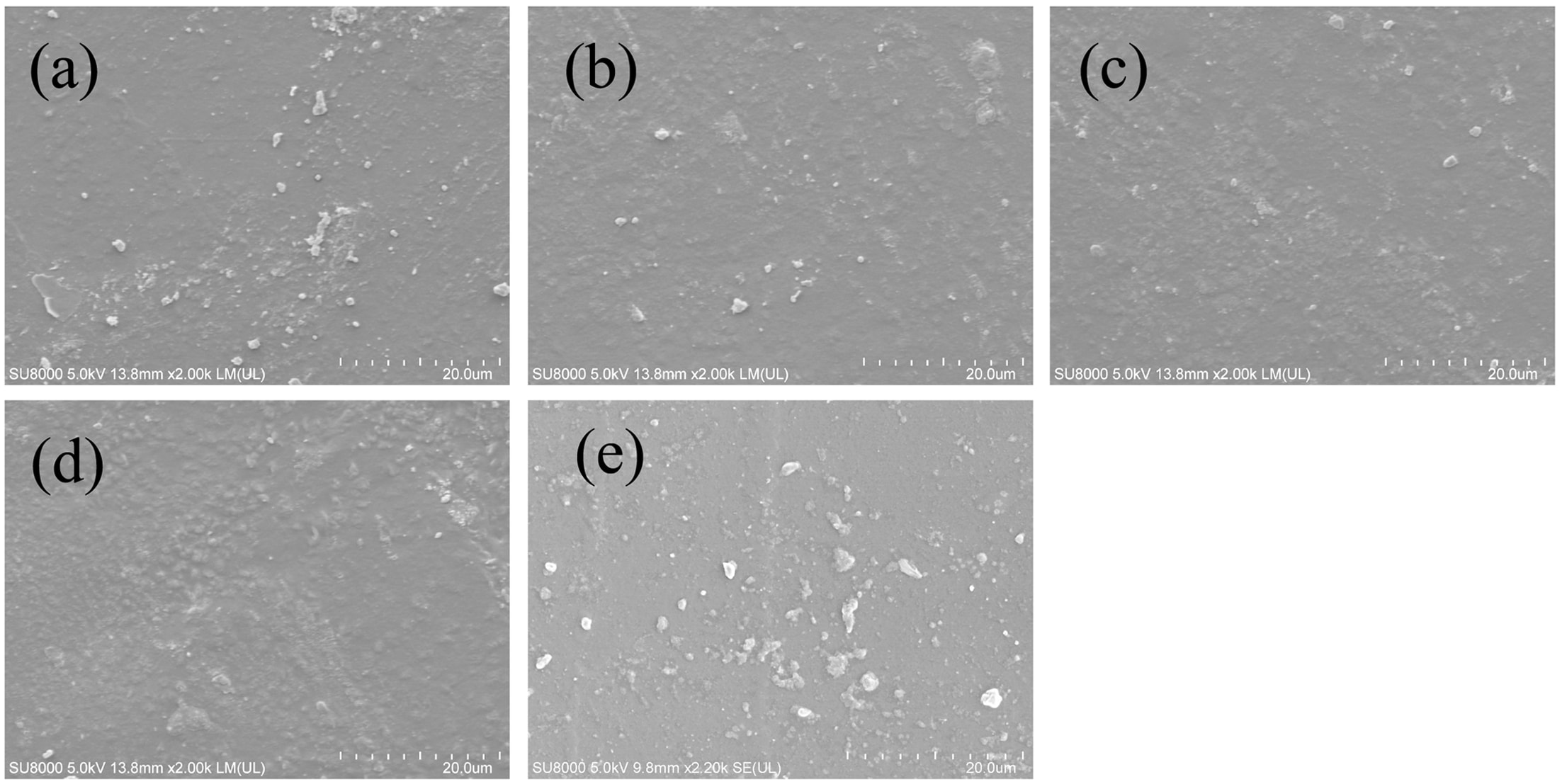
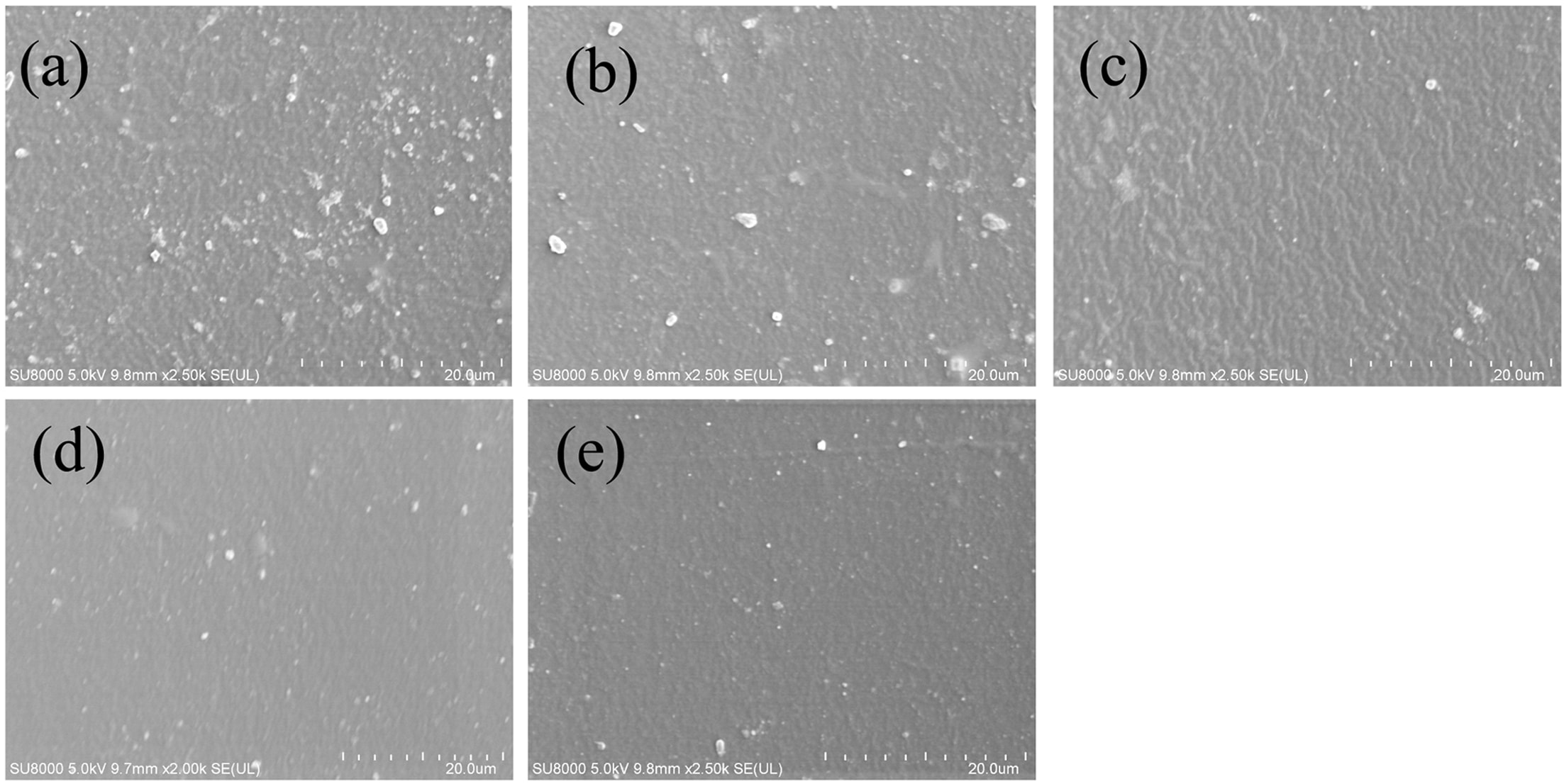
. Figures 4 and 5 present the SEM surface morphologies of silica/NR composites and CB/NR composites prepared under different drying methods and PEG-800 loadings. Overall, distinct filler agglomeration structures can be observed on the surfaces of the conventionally dried samples, indicating limited filler dispersion within the rubber matrix. In contrast, the fracture surfaces of the microwave-dried samples show a marked reduction in macroscopic agglomerates. This suggests that microwave drying modifies the dehydration history and structural uniformity of the NR precursor.
Upon the introduction of PEG‑800 under microwave drying conditions, both filler composites display further improved interfacial morphological characteristics. For the silica/NR composites, the samples containing 0.5-1 phr PEG-800 exhibit fewer and smaller visible filler-rich agglomerates and a more homogeneous fracture morphology than the sample without PEG-800. These specific morphological changes indicate improved silica dispersion and interfacial wetting. Combined with the decrease in the free-silanol-related FTIR band near 3650 cm–1, the SEM observations support the proposed hydrogen-bonding interaction between PEG-800 and surface silanol groups. In contrast, the sample containing 2 phr PEG-800 shows more visible filler-rich domains, suggesting that excessive PEG-800 may interfere with Si69-mediated interfacial coupling and promote secondary agglomeration. For the CB/NR composites, the addition of PEG-800 reduces the number of large visible carbon-black-rich agglomerates and results in a more uniform fracture morphology. These observations are consistent with improved interfacial wetting and reduced re-agglomeration of carbon black. Together with the enhancement of PEG-related FTIR bands and the absence of new absorption peaks, the SEM results support a physical-adsorption-dominated interaction between PEG-800 and carbon black.
Overall, the reduction in visible filler agglomerates and the more homogeneous fracture morphology provide morphological evidence of improved filler dispersion. When combined with the FTIR results, these observations support the proposed filler-dependent interfacial mechanisms: hydrogen-bonding-mediated regulation in the silica/NR composites and physical-adsorption and wetting-dominated regulation in the CB/NR composites.
Vulcanization Characteristics
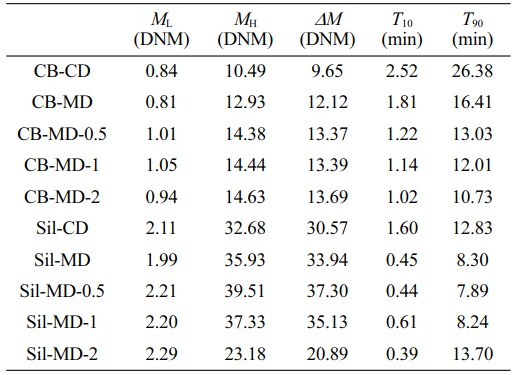
. Table 2 summarizes the vulcanization characteristics of the ten rubber composites. ML represents the minimum torque during vulcanization and reflects the flowability of the rubber compound, while MH denotes the maximum torque corresponding to the stiffness of the fully cured network.25 The difference between MH and ML (MH− ML) is commonly used to evaluate the crosslink density of vulcanized rubber.26
A higher MH−ML value indicates a greater number of effective crosslink points per unit volume, corresponding to a higher crosslink density.27 The scorch time (T10) and optimum cure time (T90) are used to characterize the vulcanization kinetics. Lower T10 and T90 values indicate a faster vulcanization rate and higher curing efficiency, whereas larger values suggest improved processing safety but slower crosslink formation.28
Vulcanization Behavior of the CB/NR Composites
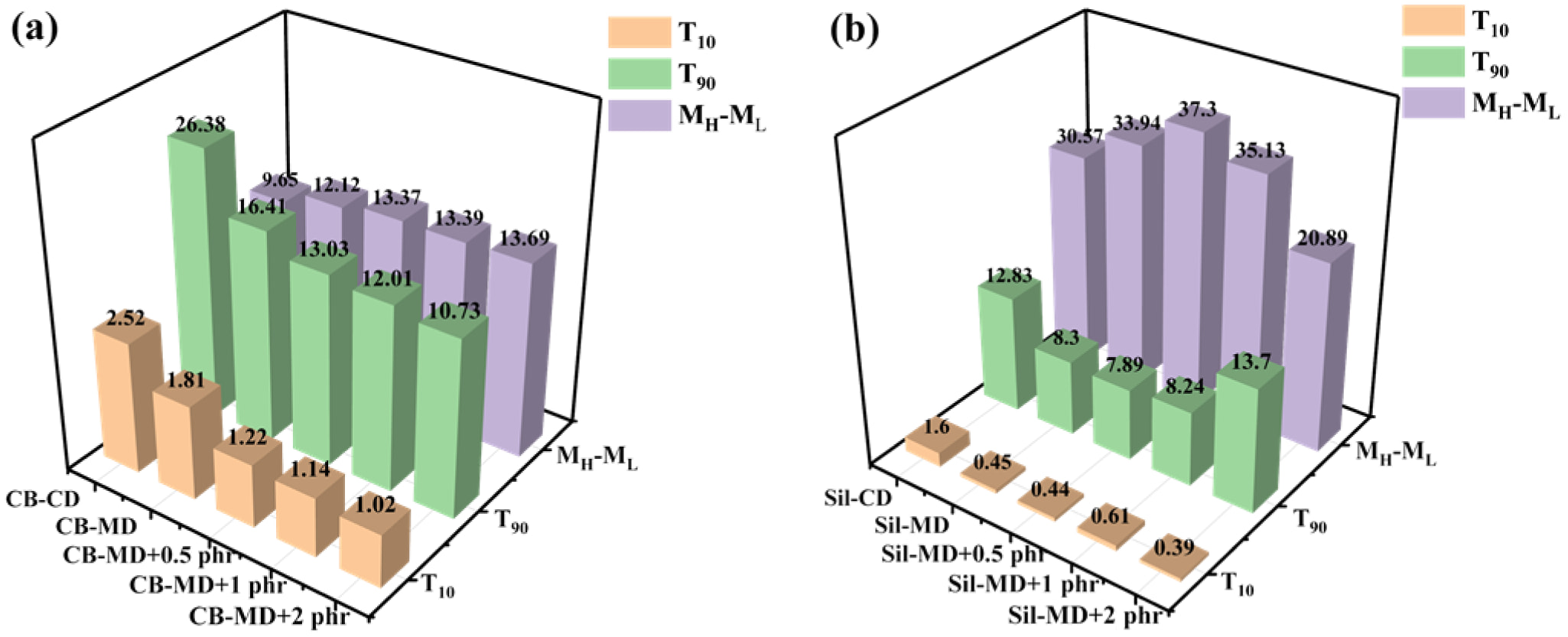
: Figure 6(a) shows the T10, T90, and ΔM values of CB composite rubber. For the CB/NR composites, the drying method exerted a pronounced influence on vulcanization kinetics. Compared with the conventionally dried sample, the ΔM of microwave-dried drying sample increased from 9.65 to 12.12, indicating that the effective crosslinking density was higher after microwave drying.29 The optimal vulcanization time was significantly shortened from 26.38 min to 16.41 min, indicating that microwave drying effectively accelerated the vulcanization process. This behavior is attributed to the reduction of residual polar moisture after microwave drying and the more uniform distribution of curing agents.22
Upon the introduction of PEG-800 under microwave drying, the vulcanization characteristics of the CB/NR composites were further modified. As the PEG-800 content increased from 0.5 to 2 phr, ML first increased and then slightly decreased from 1.01 to 0.94. This trend suggests that low PEG-800 loading increases the initial viscoelastic resistance due to interfacial adsorption and coordination effects, whereas higher loading improves flowability through lubrication and plasticization. Concurrently, both MH and ΔM continuously increased, indicating an enhancement in effective crosslink density. In addition, both T10 and T90 were significantly shortened with increasing PEG-800 content, with T90 decreasing from 13.03 min to 10.73 min. This result indicates that PEG-800 exhibits a curing-activation effect under microwave drying conditions, likely arising from the formation of coordination microdomains between PEG molecules and ZnO/accelerators, which facilitates the generation and diffusion of active sulfur species and thus accelerates vulcanization.30
Vulcanization Behavior of the Silica/NR Composites
: Figure 6(b) shows the T10, T90, and ΔM values of silica composite rubber. After microwave drying, the silica/NR composites exhibited a pronounced acceleration in vulcanization kinetics. The T90 value decreased from 12.83 min to 8.30 min, while T10 was shortened from 1.60 min to 0.45 min, indicating that microwave drying can promote the formation of a more uniform network in the uncured rubber and accelerate vulcanization. Meanwhile, ΔM increased from 30.57 to 33.94, suggesting the formation of a denser crosslinked network.24,31
When PEG-800 was introduced under microwave drying, the silica/NR composites exhibited a distinct dose-dependent vulcanization behavior. At PEG-800 contents of 0.5-1 phr, both MH and ΔM further increased, while T90 remained at a relatively low level. This indicates that an appropriate amount of PEG-800 can form hydrogen bonds with silanol groups on the silica surface, thereby weakening filler–filler interactions and improving the homogeneity of the curing system, which facilitates crosslink network formation. However, when the PEG-800 content increased to 2 phr, MH and ΔM decreased markedly from 35.13 to 20.89, accompanied by a significant extension of T90 to 13.70 min. This result suggests that excessive PEG-800 may partially shield the coupling efficiency of Si69 or the active sites involved in vulcanization, thereby weakening silica–rubber interfacial coupling and inhibiting both vulcanization rate and crosslink density.
Mooney Viscosity Characterization
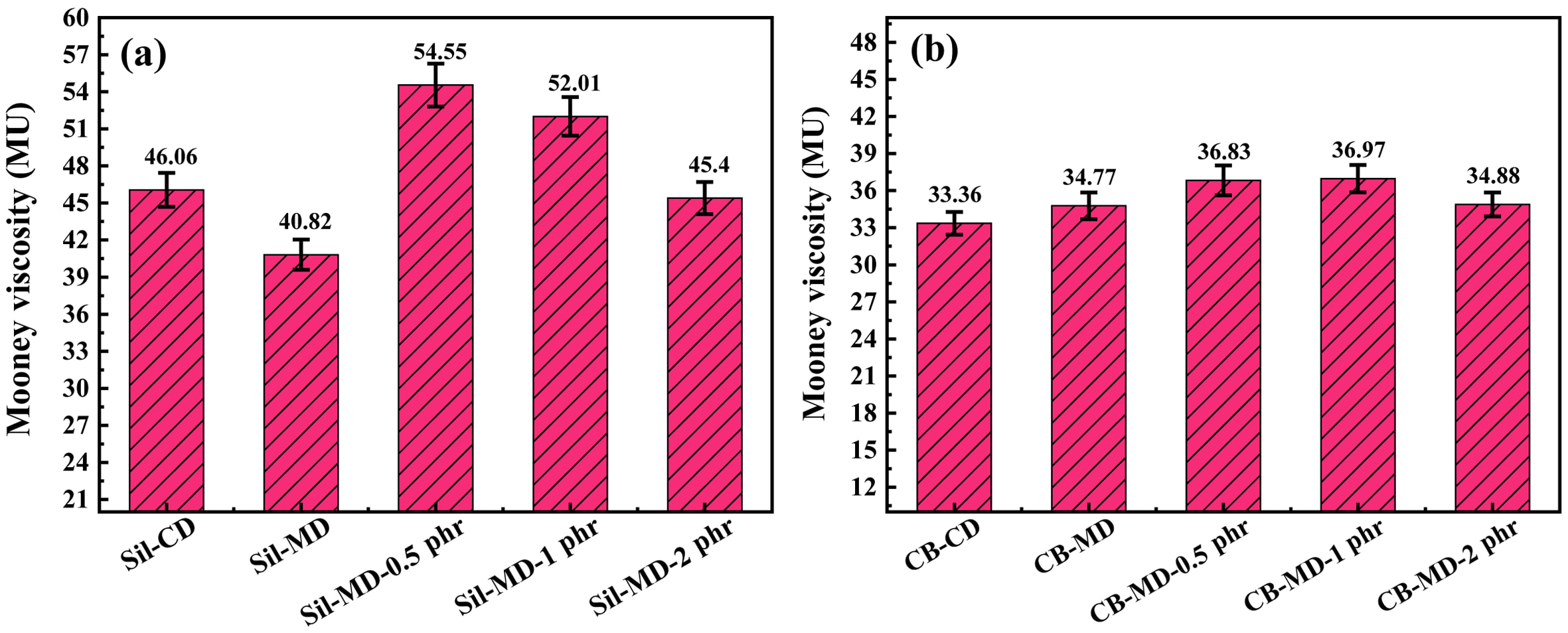
. Mooney viscosity reflects the processability of rubber compounds as well as the strength of filler–rubber interactions.32-34 As shown in Figure 7, the Mooney viscosity of both filler composites is strongly influenced by the drying method. For the silica/NR composites, the Mooney viscosity of the conventionally dried sample was 46.06 MU, which decreased to 40.82 MU after microwave drying. This reduction indicates that microwave drying, through a more uniform and rapid dehydration process, effectively changes the raw rubber network, thereby improving compound flowability. Upon the introduction of PEG-800 under microwave drying, the Mooney viscosity increased markedly at low PEG loadings and then gradually decreased with further PEG addition. This non-monotonic trend suggests that a small amount of PEG-800 enhances the interfacial interaction between silica and rubber via hydrogen bonding, whereas at higher loadings, PEG-800 may exert a certain shielding effect on the coupling agent, weakening the effective coupling between silica and rubber and consequently reducing the Mooney viscosity.
In contrast, the CB/NR composites exhibited a generally lower Mooney viscosity and a weaker response to PEG-800 addition. Microwave drying resulted in a slight decrease in Mooney viscosity compared with conventional drying, while the incorporation of PEG-800 induced only minor variations, with values remaining within a narrow range of 34.88–36.97 MU. This behavior indicates that, in the CB/NR composites where physical adsorption governs filler–rubber interaction, PEG-800 exerts a limited influence on the processing rheology. Overall, microwave drying contributes to improved initial processability of rubber compounds, whereas the effect of PEG-800 on Mooney viscosity is distinctly filler-dependent and more pronounced in the silica/NR composites.
Mechanical Properties
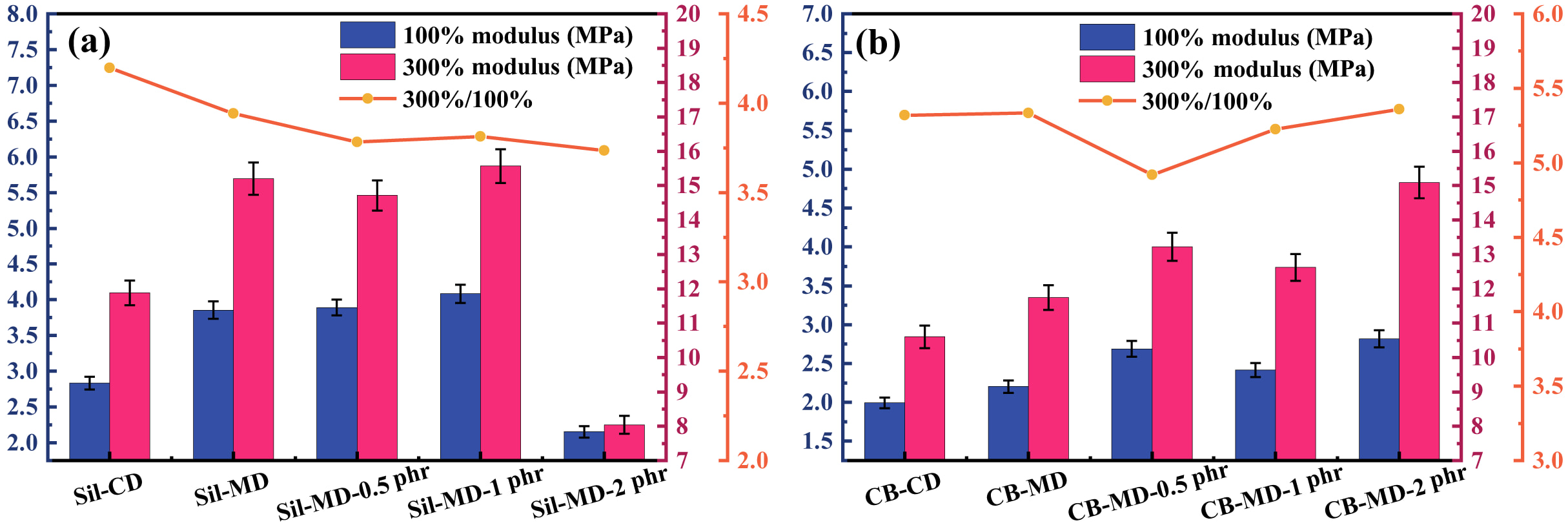
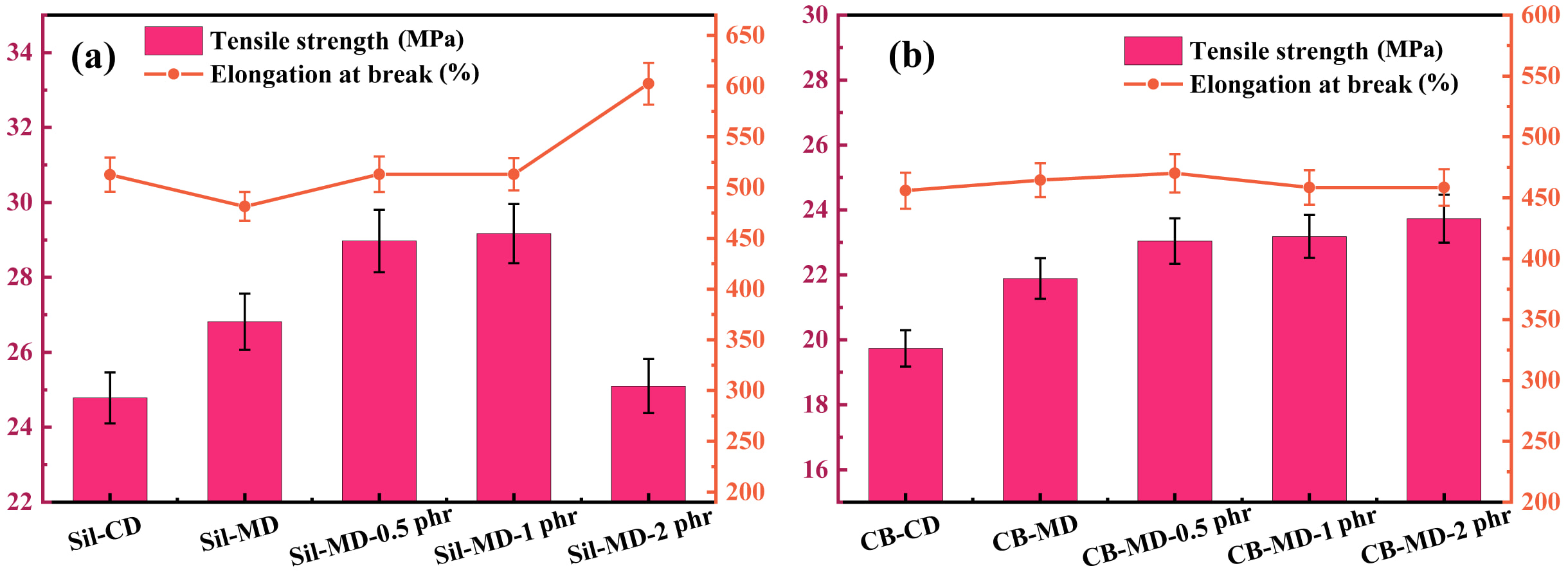
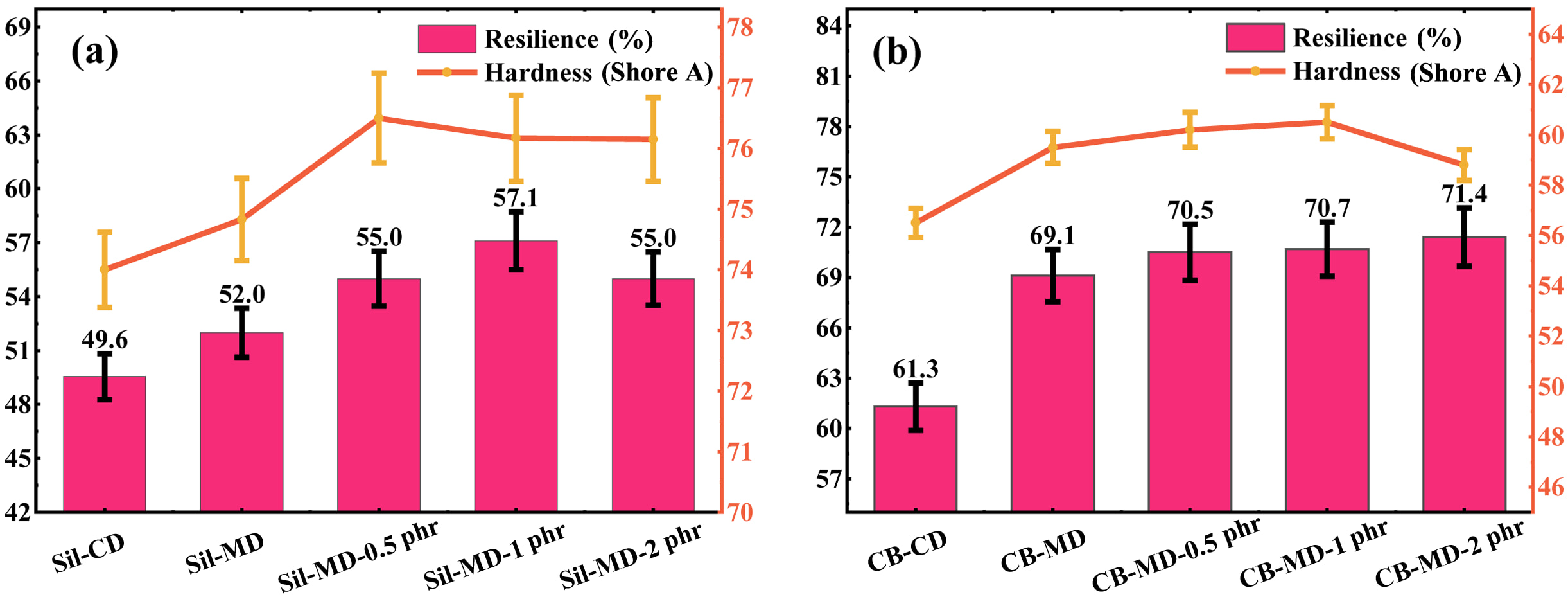
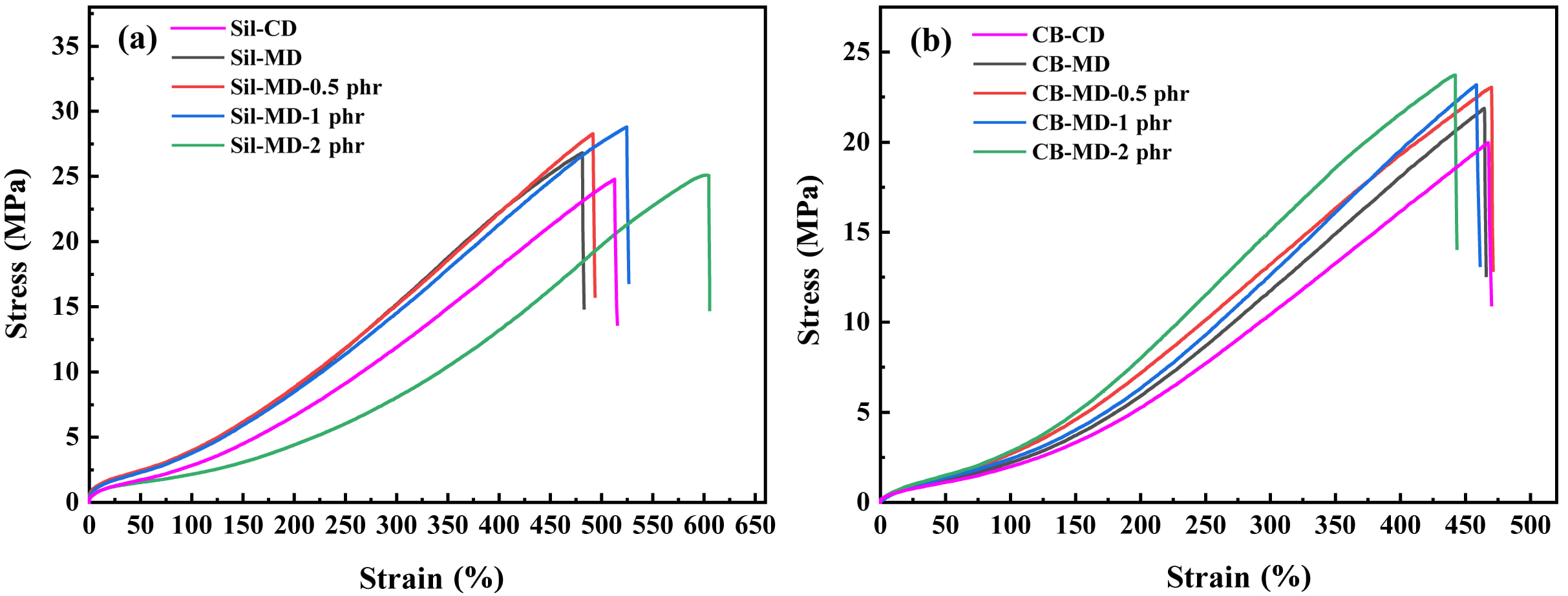
. Figures 8(a) and 8(b) show the 100% and 300% moduli and the 300%/100% modulus ratios of the silica/NR and CB/NR composites, respectively. Figures 9(a) and 9(b) present the tensile strength and elongation at break of the two composite systems. Figures 10(a) and 10(b) show their hardness and rebound resilience, respectively, while Figures 11(a) and 11(b) present representative tensile stress–strain curves. Overall, microwave drying improved the tensile modulus and tensile strength of both composite systems compared with conventional drying, indicating the formation of a more uniform and effective reinforcing network.
For the silica/NR composites, the improvement in mechanical properties achieved by microwave drying was particularly pronounced. Compared with the Sil-CD sample, the Sil-MD sample exhibited an increase in the modulus at 100% elongation from 2.83 to 3.86 MPa, the modulus at 300% elongation from 11.89 to 15.20 MPa, and the tensile strength from 24.78 to 26.82 MPa. These improvements demonstrate that microwave drying enhances the effective dispersion of the filler within the rubber matrix. Upon incorporating PEG-800 into the microwave-dried silica system, the mechanical properties were further enhanced. Compared with Sil-CD, the Sil-MD-0.5 phr and Sil-MD-1 phr samples exhibited increases of 58.1% and 48.0%, respectively, in the modulus at 100% elongation. Their moduli at 300% elongation increased by 27.9% and 23.8%, respectively, while their tensile strengths increased by 16.9% and 17.7%, respectively. Both formulations maintained elongations at break of approximately 513%. These results indicate that an appropriate amount of PEG-800 can weaken filler–filler interactions and strengthen filler–rubber interfacial bonding through hydrogen bonding with the silanol groups on the silica surface, thereby achieving a simultaneous enhancement in both modulus and strength. However, when the PEG-800 loading was increased to 2 phr, both the moduli and the tensile strength declined. This suggests that the excessive PEG-800 induces a coupling shielding effect that impairs the effective reinforcement between silica and rubber. Therefore, among the investigated silica/NR formulations, Sil-MD-1 phr exhibited the most favorable overall mechanical performance, whereas Sil-MD-0.5 phr provided the highest torque difference.
By comparison, the CB/NR composites exhibit a different mechanical response. Compared with the CB-CD sample, the CB-MD sample showed increases in the 300% modulus from 8.04 to 10.60 MPa and in tensile strength from 19.74 to 21.89 MPa, indicating that microwave drying also contributes to improved carbon black dispersion. With the incorporation of PEG-800 under microwave drying, the mechanical properties of the CB/NR composites show an overall increasing trend with PEG content. Compared with the CB-CD sample, the CB-MD-2 phr sample showed a 41.1% increase in the 300% modulus, a 20.2% increase in tensile strength, and a marginal 0.56% increase in elongation at break. However, its hardness and elongation at break were slightly lower than those of the CB-MD-1 phr sample. These results suggest that PEG-800 primarily enhances both modulus and strength by improving interfacial compatibility, thereby reducing the degree of carbon black agglomeration and buffering interfacial stress concentration, without inducing a pronounced interfacial shielding effect.
For the silica/NR composites, 1 phr PEG-800 provides a favorable balance between reinforcement and extensibility, whereas excessive PEG-800 weakens the reinforcing effect. For the CB/NR composites, the mechanical properties continue to improve up to 2 phr. However, the incremental improvement in tensile strength becomes limited.
DIN Abrasion
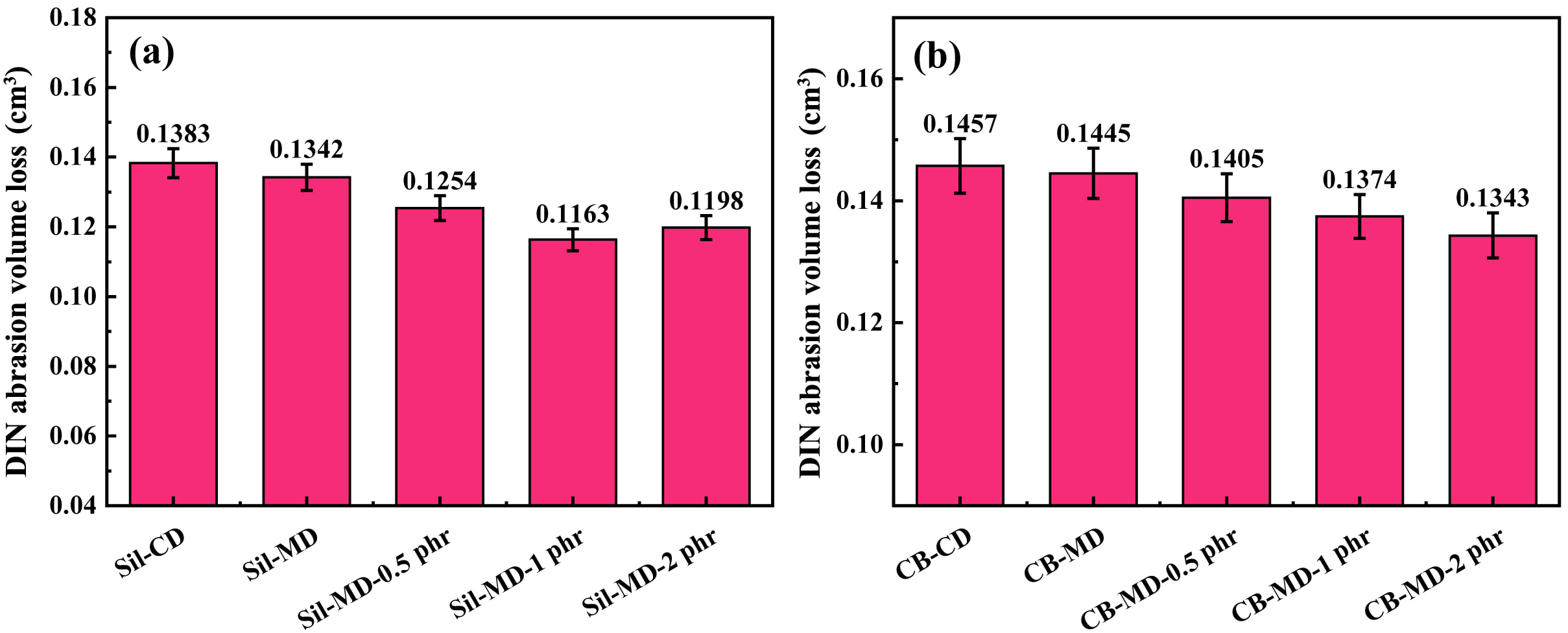
. The abrasion results are presented in Figure 12. For the silica/NR composites, the abrasion resistance improves with increasing PEG-800 content, reaching an optimum at 1 phr PEG-800. This enhancement is attributed to the formation of a stronger filler–rubber interfacial layer via interfacial interactions. Compared with the Sil-CD sample, the DIN abrasion volume loss of Sil-MD-1 phr decreased by 15.9%. In the CB/NR composites, abrasion resistance also improves progressively with increasing PEG-800 content. Compared with the CB-CD sample, the DIN abrasion volume loss of CB-MD-2 phr decreased by 7.82%, which is attributed to the improved interfacial compatibility imparted by PEG-800.
Dynamic Mechanical Analysis
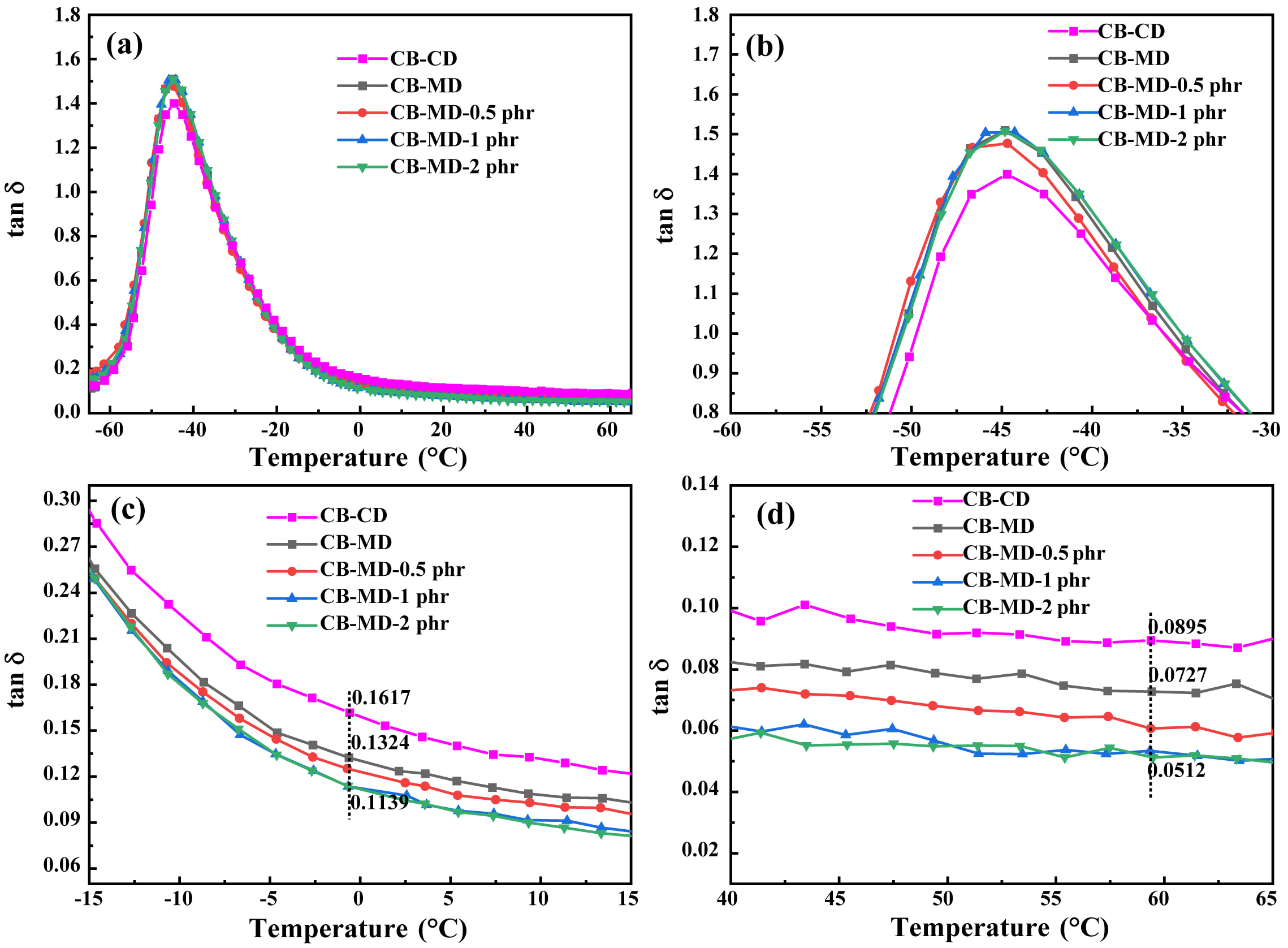
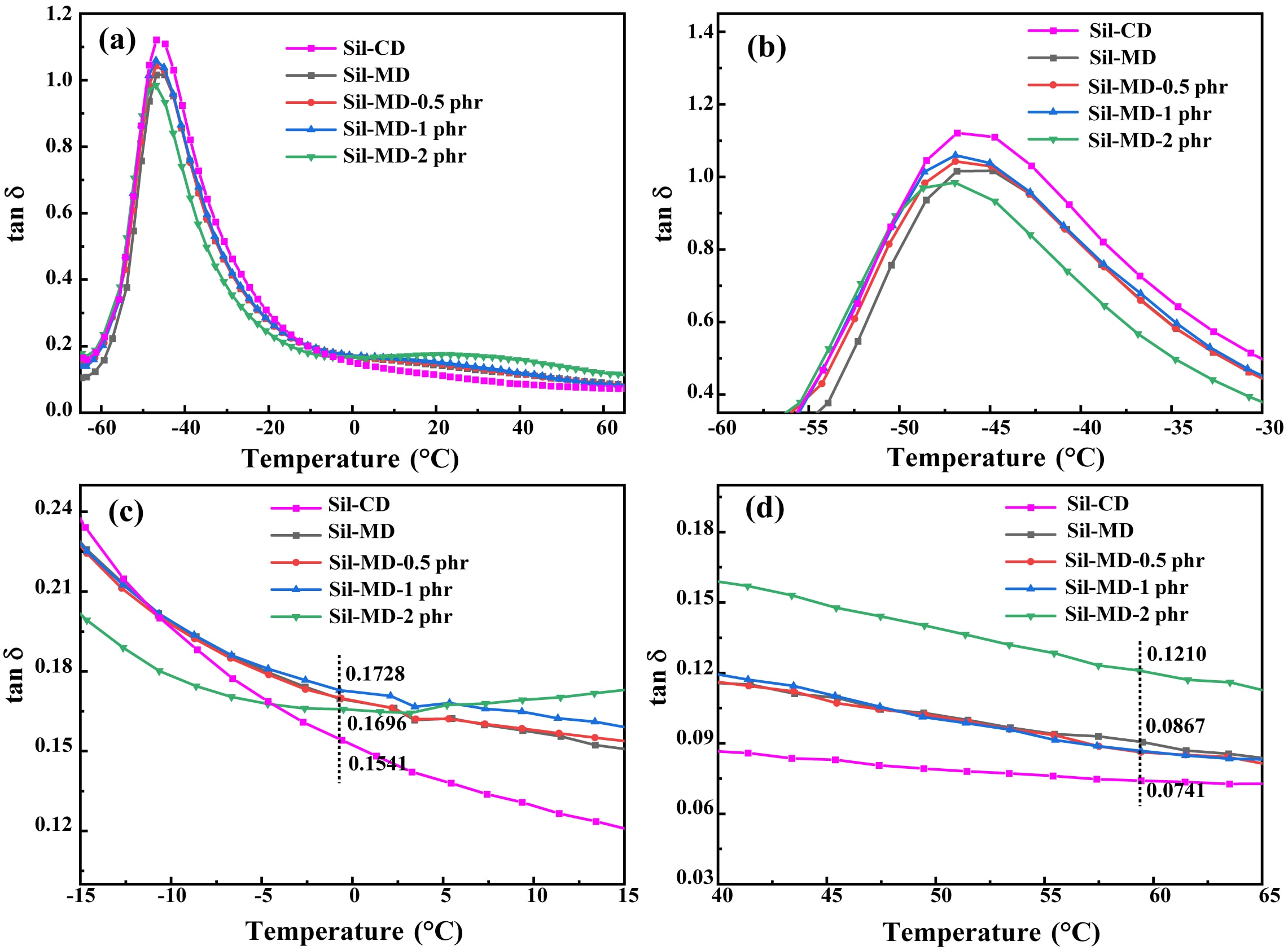
. The storage modulus (E′) represents the energy stored within the polymer chains due to elastic deformation, whereas the loss modulus (E″) represents the energy dissipated by the polymer during deformation. The mechanical loss factor (tanδ) is the ratio of the loss modulus to the storage modulus. In laboratory analysis, DMA is widely used to evaluate wet-skid- and rolling-resistance-related performance. A higher tan δ at 0 °C generally indicates better wet-skid resistance, whereas a lower tan δ at 60 °C indicates lower rolling resistance.35 It is well known that high‑resilience rubber compounds exhibit high ice friction in the temperature range around −20 °C; therefore, a lower tan δ value at −20 °C can be used to predict excellent snow grip performance of the vulcanizate.36,37
Figure 13 presents the representative temperature-dependent loss factor (tan δ) curves of CB/NR composites prepared under different drying methods and PEG‑800 loadings. Compared with the CB-CD samples, the CB-MD sample exhibits a slight decrease in tan δ in the 0 °C temperature region, suggesting that the increased crosslink density resulting from microwave drying reduces the low-temperature tan δ and consequently impairs wet skid resistance. After introducing PEG‑800 under microwave drying conditions, the tan δ value of CB-MD-2 phr decreased by 29.6% relative to the conventionally dried control, indicating that PEG‑800 also contributes to an increase in crosslink density, thereby further reducing wet skid resistance. In the high-temperature region (around 60 °C, Figure 13(d)), the tan δ of the microwave-dried carbon black system is markedly lower than that of the conventionally dried sample and exhibits a continuous decreasing trend with increasing PEG‑800 loading. The tan δ value of CB-MD-2 phr decreased by 42.8% compared to the conventionally dried control. This suggests that the synergistic combination of PEG‑800 and microwave drying effectively suppresses filler-network reorganization and interfacial friction under dynamic loading, thereby reducing the internal energy dissipation of the rubber. This indicates that the CB composite possesses lower rolling resistance.
Figure 14 presents the representative temperature-dependent loss factor (tan δ) curves of the silica-filled rubber composites. In the 0 °C temperature region (Figure 14(c)), the PEG‑800/silica/NR composite prepared by microwave drying exhibits a slight increase in tan δ compared with the conventionally dried sample, indicating an improvement in wet skid resistance. After introducing PEG‑800 under microwave drying conditions, the tan δ value of the Sil-MD-1 phr increased by 12.1% relative to the Sil-CD sample. In the high-temperature region around 60 °C, the differences among the samples become more pronounced. Compared with the conventionally dried sample, the tan δ of the microwave-dried sample increases. As the PEG‑800 loading increases, tan δ shows a gradually rising trend, with the 2 phr PEG‑800 sample exhibiting a markedly higher tan δ than the other formulations across the entire high-temperature region. This is likely because excessive PEG induces filler agglomeration, which increases internal friction and consequently causes tan δ to rise.
Payne Effect
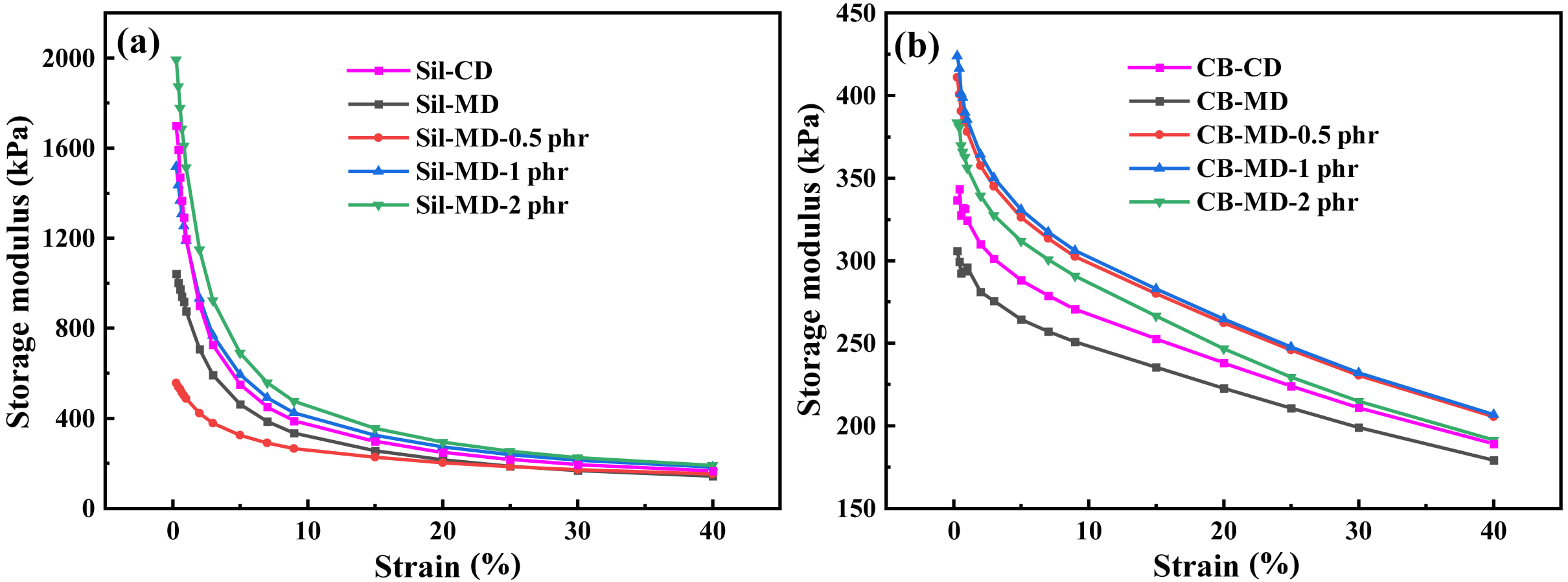
. Figure 15(a) and Figure 15(b) present, respectively, the representative strain-dependent storage modulus (G′) from RPA measurements for the silica-filled and carbon black-filled rubber composites prepared under different drying methods and PEG‑800 loadings. Both filler composites exhibit typical Payne effect characteristics: G′ is high in the low-strain region and decreases rapidly with increasing strain, reflecting the progressive breakdown of the filler network under dynamic deformation. Compared with the conventionally dried samples, the microwave-dried samples display a lower storage modulus in the low-strain region, indicating reduced rigid filler–filler networking and improved filler dispersion. This phenomenon can be attributed to changes in the structure and processability of the PEG-containing NR precursor, which facilitate filler breakup, wetting, and distribution during subsequent compounding, enabling more filler to participate in network formation through effective contacts.
After introducing PEG-800 on the basis of microwave drying, the Payne effect differs between the two types of filler composites. For the silica/NR composites, the sample containing 0.5 phr PEG-800 exhibits the lowest storage modulus in the low-strain region, indicating that PEG-800 effectively weakens the irreversible filler–filler agglomeration by forming hydrogen bonds with the silanol groups on the silica surface. At a loading of 2 phr PEG-800, the storage modulus in the low-strain region increases, which may be attributed to the coupling shielding effect induced by excessive PEG-800 that paradoxically intensifies filler agglomeration. In the carbon black-filled composites, the incorporation of PEG-800 raises the low-strain storage modulus, likely because the ether oxygen atoms of PEG-800 engage in weak hydrogen bonding with trace oxygen-containing functional groups on the surface of carbon black aggregates, thereby enhancing the inter-aggregate connectivity. The above RPA results indicate that the combined effect of microwave drying and PEG-800 does not simply weaken the filler network; rather, it transforms the network from a structure dominated by rigid agglomerates into a more uniform and reversible physical network.
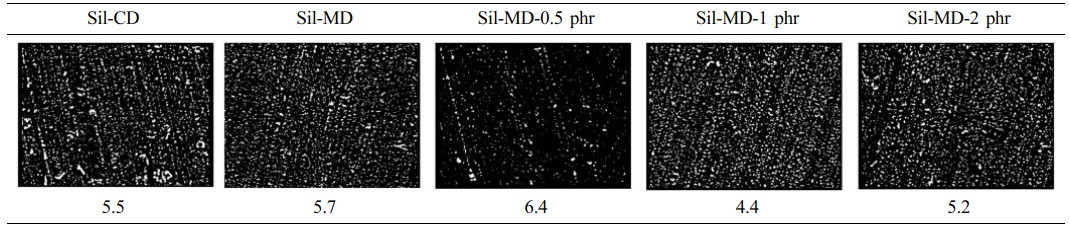
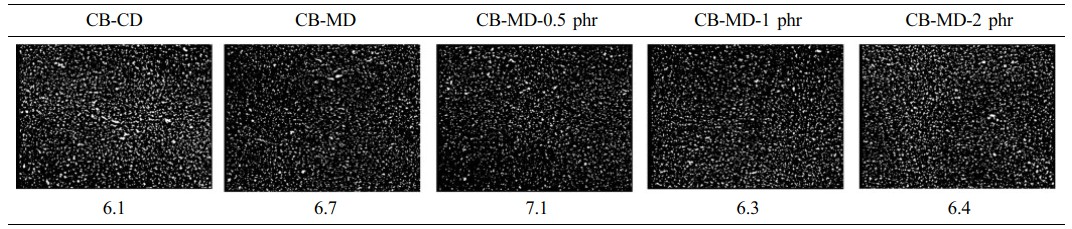
Silica/Carbon Black Dispersion. Table 3 and Table 4 show the dispersion of silica and CB in 10 types of composite rubber. The dispersion results of the silica/NR composites indicate that both the drying method and PEG-800 loading have a pronounced influence on filler dispersion. The dispersion index of the conventionally dried sample is 5.5, which increases to 5.7 after microwave drying, suggesting that rapid volumetric heating during microwave drying effectively changes the structure and processability of the PEG-containing NR latex. Upon the incorporation of PEG-800 under microwave drying, a clear dosage-dependent behavior is observed. The dispersion index reaches a maximum value of 6.4 at a PEG-800 loading of 0.5 phr, indicating optimal suppression of filler–filler interactions and improved interfacial compatibility. However, further increasing the PEG-800 content to 2 phr leads to a decrease in dispersion to 5.2, implying that excessive PEG-800 may induce a coupling shielding effect on the silica surface, thereby impairing the uniform dispersion of the filler. This dosage-dependent dispersion behavior is consistent with the FTIR evidence of changes in the silanol environment and the SEM observation of improved morphology at moderate PEG-800 loading but increased agglomeration at excessive loading.
In comparison, the CB/NR composites exhibit higher overall dispersion, reflecting the lower polarity of carbon black and its inherently weaker tendency toward strong agglomeration. The dispersion index of the conventional drying carbon black composite is 6.1 and increases to 6.7 after microwave drying, further confirming the effectiveness of microwave drying in improving initial filler dispersion. With the addition of PEG-800 under microwave drying, the dispersion index reaches its highest value of 7.1 at 0.5 phr PEG-800 and then shows a slight decline in the range of 1–2 phr. This trend indicates that an appropriate amount of PEG-800 forms a physical wetting layer on the carbon black surface, reducing van der Waals attraction and suppressing re-agglomeration, whereas excessive PEG-800 leads to saturation of the interfacial effect due to dominant lubrication and plasticization. Overall, microwave drying combined with PEG-800 exhibits a broader effective dispersion window in the CB/NR composites, while the silica/NR composites show a stronger sensitivity to PEG-800 dosage. This trend agrees with the more homogeneous SEM morphology and further supports the interpretation that PEG-800 improves carbon-black dispersion mainly through physical adsorption and interfacial wetting.
Comparative Interfacial Regulation and Optimization of PEG-800 Loading in Silica/NR and CB/NR Composites. Although the combined strategy of latex-phase PEG-800 incorporation and microwave drying affected both silica/NR and CB/NR composites, the responses of the two systems were strongly dependent on the surface characteristics of the fillers. Because the two formulations differed in filler loading, coupling-agent content, and curing system, the following comparison focuses mainly on the PEG-800-dependent variation trends within each system rather than on the direct comparison of absolute property values. In both composites, PEG-800 contributed to the regulation of filler dispersion and filler-rubber interfacial interactions; however, the dominant interfacial mechanism, dosage sensitivity, and resulting property balance were distinctly different.
In the silica/NR composites, PEG-800 mainly regulated the interface through hydrogen-bonding interactions with surface silanol groups. The ether oxygen atoms and terminal hydroxyl groups of PEG-800 may compete with the hydrogen bonding between adjacent silica particles, thereby weakening silica-silica association and improving the wetting of silica by the NR matrix. The changes in the O-H stretching region of the FTIR spectra, together with the more continuous fracture morphology and reduced visible agglomeration observed at 0.5-1 phr PEG-800, were consistent with this interpretation. The torque difference increased from 33.94 for the microwave-dried sample without PEG-800 to 37.30 at 0.5 phr, while the samples containing 0.5-1 phr maintained tensile strengths of approximately 29 MPa. However, when the PEG-800 loading was increased to 2 phr, more pronounced filler agglomeration was observed, and the torque difference decreased markedly to 20.89, accompanied by deterioration in mechanical and high-temperature dynamic properties. These changes may be attributed to competitive adsorption of excessive PEG-800 on the silica surface, which partially shields the silanol groups or interferes with Si69-mediated filler–rubber coupling. Therefore, 0.5-1 phr was identified as the effective loading range for the silica/NR composites. Although 0.5 phr produced the highest torque difference and a favorable dispersion state, 1 phr was selected as the overall optimum because it maintained a comparable tensile strength while providing a more favorable balance among interfacial morphology, abrasion resistance, and dynamic-mechanical performance.
In contrast, the interaction between PEG-800 and carbon black was dominated primarily by physical adsorption and surface wetting. The enhancement of the PEG-related C-O-C and -CH2- absorption bands without the appearance of new characteristic peaks was consistent with a predominantly physical interfacial-regulation mechanism. Accordingly, the CB/NR composites exhibited a more gradual response to increasing PEG-800 content. The filler-dispersion index reached its maximum at 0.5 phr, whereas the tensile modulus and high-temperature dynamic performance continued to improve at higher loadings. Increasing the PEG-800 loading to 1 phr further increased the modulus and decreased tan d at 60 oC, indicating reduced dynamic energy dissipation and improved rolling-resistance-related performance. Although increasing the PEG-800 loading from 1 to 2 phr further increased the modulus and slightly reduced tan δ at 60 °C, the additional increase in tensile strength was limited, no further improvement in filler dispersion was obtained, and both hardness and elongation at break decreased relative to the 1 phr sample. Therefore, 1 phr was selected as the overall optimum for the CB/NR composites.
Overall, the silica/NR system exhibited a stronger but more dosage-sensitive response to PEG-800 because its interfacial behavior was governed by hydrogen bonding and competition with Si69-mediated coupling. By comparison, the CB/NR system showed a broader and more gradual response dominated by physical adsorption and wetting. These differences demonstrate that the optimum PEG-800 loading cannot be determined from the maximum value of a single property or regarded as a universal formulation parameter. Instead, it should be selected according to the overall balance among filler dispersion, interfacial structure, curing behavior, mechanical reinforcement, abrasion resistance, and dynamic-mechanical performance. Based on this comprehensive evaluation, 1 phr PEG-800 was selected as the overall optimum for both systems, while 0.5-1 phr represented the effective loading range for the silica/NR composites.
|
Figure 2 (a) Schematic illustration of microwave drying and the melting–diffusion behavior of PEG under microwave irradiation; (b) interfacial interaction mechanisms of PEG with rubber molecular chains in silica- and carbon black-filled rubber composites. |
|
Figure 3 FTIR spectra of (a) silica/NR composites; (b) CB/NR composites. |
|
Figure 4 SEM images of silica/NR composites: (a) Sil-CD; (b) Sil-MD; (c) Sil-MD-0.5 phr; (d) Sil-MD-1 phr; (e) Sil-MD-2 phr. |
|
Figure 5 SEM images of CB/NR composites: (a) CB-CD; (b) CB-MD; (c) CB-MD-0.5 phr; (d) CB-MD-1 phr; (e) CB-MD-2 phr. |
|
Figure 6 Cure characteristics of (a) CB/NR composites; (b) silica/NR composites. |
|
Figure 7 Mooney viscosities of (a) silica/NR composites; (b) CB/NR composites. |
|
Figure 8 100% modulus, 300% modulus, and 300%/100% modulus ratio of (a) silica/NR composites; (b) CB/NR composites. |
|
Figure 9 Tensile strength and elongation at break of (a) silica/NR composites; (b) CB/NR composites. |
|
Figure 10 Hardness and rebound resilience of (a) silica/NR composites; (b) CB/NR composites. |
|
Figure 11 Representative tensile stress–strain curves of (a) silica/NR composites; (b) CB/NR composites. |
|
Figure 12 DIN abrasion volume loss of (a) silica/NR composites; (b) CB/NR composites. |
|
Figure 13 (a) Temperature dependence of tan δ for CB-filled rubber composites; (b) tan δ curves of CB-filled rubber composites in the glass transition region; (c) tan δ values of CB-filled rubber composites at 0 °C; (d) tan δ values of CB-filled rubber composites at 60 °C. |
|
Figure 14 (a) Temperature dependence of tan δ for silica-filled rubber composites; (b) tan δ curves of silica-filled rubber composites in the glass transition region; (c) tan δ values of silica-filled rubber composites at 0 °C; (d) tan δ values of silica-filled rubber composites at 60 °C. |
|
Figure 15 Strain dependence of the storage modulus of (a) silica/NR composites; (b) CB/NR composites. |
|
Table 2 Vulcanization Characteristics and Mooney Viscosity of Ten Rubber Composite Materials |
This study systematically investigated the structural evolution and property regulation of natural rubber composites filled with silica (coupled with Si69) and carbon black through the combined introduction of PEG-800 in the latex phase and microwave drying. The results demonstrate that microwave drying enables rapid and homogeneous moisture removal via volumetric heating, effectively improving the initial structural uniformity of the rubber matrix and providing a favorable foundation for subsequent filler dispersion and vulcanization network formation.
On this basis, PEG-800 exhibits a pronounced filler-dependent interfacial regulation effect. In the silica/NR composites, an appropriate PEG-800 dosage (0.5-1 phr) forms hydrogen bonds with surface silanol groups, weakening filler–filler interactions while enhancing filler–rubber interfacial coupling. Together, these effects improve vulcanization efficiency, crosslink density, mechanical performance, and low-temperature dynamic behavior. Considering the overall balance of processing, mechanical, and dynamic properties, 0.5-1 phr was identified as the effective loading range for the silica/NR composites, with 1 phr selected as the overall optimum.
In the CB/NR composites, PEG-800 primarily functions through physical adsorption and interfacial wetting regulation, continuously improving filler dispersion and stress transfer efficiency. As a result, modulus, tensile strength, and resilience increase progressively with PEG-800 content, while high-temperature tan δ is effectively reduced, indicating a beneficial effect on rolling resistance. Among the investigated formulations, 1 phr PEG-800 provides the optimal balance between reinforcement efficiency and dynamic performance and is therefore recommended as the optimal loading for the CB/NR composites.
- 1. Mooibroek, H.; Cornish, K. Alternative Sources of Natural Rubber. Appl. Microbiol. Biotechnol. 2000, 53, 355-365.
-

- 2. Omar, M.-F.; Ali, F.; Jami, M.-S.; Azmi, A.-S.; Ahmad, F.; Marzuki, M.-Z.; Muniyandi, S.-K.; Zainudin, Z.; Kim, M.-P. A Comprehensive Review of Natural Rubber Composites: Properties, Compounding Aspects, and Renewable Practices with Natural Fibre Reinforcement. J. Renewable Mater. 2025, 13, 497-538.
-
- 3. Liu, Y.; Mei, J.; Gong, D.; Chen, Y.; Zhang, C. Effect of Block Polyether as an Interfacial Dispersant on the Properties of Nanosilica/Natural Rubber Composites. Polymers 2025, 17, 1091.
-
- 4. Sattar, M. A.; Nair, A. S.; Xavier, P.; Patnaik, A. Natural Rubber–SiO2 Nanohybrids: Interface Structures and Dynamics. Soft Matter 2019, 15, 2826-2837.
-
- 5. Hjelm, R. P.; Wampler, W.; Gerspacher, M. The Structure of Carbon Black-Elastomer Composites by Small-Angle Neutron Scattering and the Method of Contrast Variation; Los Alamos National Laboratory: Los Alamos, 1996. https://digital.library.unt.edu/ark:/67531/metadc672469/ (accessed 2026-08-19).
- 6. Wang, D.; Tang, Z.; Huang, R.; Duan, Y.; Wu, S.; Guo, B.; Zhang, L. Interface Coupling in Rubber/Carbon Black Composites toward Superior Energy-Saving Capability Enabled by Amino-Functionalized Polysulfide. Chem. Mater. 2023, 35, 764-772.
-
- 7. Phumnok, E.; Saetiao, P.; Bumphenkiattikul, P.; Rattanawilai, S.; Khongprom, P. CFD Simulation of Silica Dispersion/Natural Rubber Latex Mixing for High Silica Content Rubber Composite Production. RSC Adv. 2024, 14, 12612-12623.
-
- 8. Bera, A.; Manna, B.; Ganguly, D.; Amarnath, S.; Nanda, S.; Ghosh, A.; Chattopadhyay, S. Pretreatment of Hevea Latex by Sorbitol: Improving the Efficacy of Silica Dispersion by a Biomimetic Approach. ACS Appl. Polym. Mater. 2022, 5, 441-451.
-
- 9. Mathew, B. C.; Marshal, S. J. J.; Palanisamy, S.; Ayrilmis, N. An Overview on Recent Approaches on Drying of Natural Rubber Materials. Mater. Res. Express 2024, 11, 062005.
-
- 10. Zhao, L.; Sun, X.; Liu, Q.; Zhao, J.; Xing, W. Natural Rubber/Graphene Oxide Nanocomposites Prepared by Latex Mixing. J. Macromol. Sci. Part B 2015, 54, 581-592.
-
- 11. Bo, Y.; Cui, J.; Cai, Y.; Xu, S. Preparation and Characterization of Poly(Methyl Methacrylate) and Poly(Maleic Anhydride-Co-Diallyl Phthalate) Grafted Carbon Black through Γ-Ray Irradiation. Radiat. Phys. Chem. 2016, 119, 236-246.
-
- 12. Li, B.; Xiao, Y.; Huang, Y.; Gong, Z.; Chen, Y.; Li, S.; Wang, C.; Bian, H. Application of Low‐Molecular‐Weight Polyethylene Glycol‐Modified Silica in Natural Rubber Composites. Polym. Eng. Sci. 2024, 64, 5154-5165.
-
- 13. Xu, M.; Xue, H.; Tin, W. Y.; Wang, H.; Yong, Z.; Wang, Q. Synergistic Effect by Polyethylene Glycol as Interfacial Modifier in Silane-Modified Silica-Reinforced Composites. Polymers 2021, 13, 788.
-
- 14. Hu, C.-T.; Lin, H.-Y.; Chiu, P.-H.; Dai, H.-Y.; Liberman, L.; Lin, J.-M.; Jeng, U.-S.; Tsao, C.-S.; Hsieh, C.-C.; Dai, C.-A. Hierarchical Morphology and Interfacial Dynamics in Silane-Free Rubber Nanocomposites: A Saxs-Guided Approach toward Sustainable High-Performance Tire Materials. Mater. Horiz. 2026, 13, 337-354.
-
- 15. Carretero-González, J.; Valentín, J.; Arroyo, M.; Saalwächter, K.; Lopez-Manchado, M. Natural Rubber/Clay Nanocomposites: Influence of Poly(Ethylene Glycol) on the Silicate Dispersion and Local Chain Order of Rubber Network. Eur. Polym. J. 2008, 44, 3493-3500.
-
- 16. Kim, W. S.; Paik, H. J.; Bae, J. W.; Kim, W. Effect of Polyethylene Glycol on the Properties of Styrene‐Butadiene Rubber/Organoclay Nanocomposites Filled with Silica and Carbon Black. J. Appl. Polym. Sci. 2011, 122, 1766-1777.
-
- 17. Ruiz, V.; Yate, L.; Langer, J.; Kosta, I.; Grande, H. J.; Tena-Zaera, R. Pegylated Carbon Black as Lubricant Nanoadditive with Enhanced Dispersion Stability and Tribological Performance. Tribol. Int. 2019, 137, 228-235.
-
- 18. Zeng, X.; Zhou, J.; Peng, J.; Zhang, C.; Wang, D.; Song, Y.; Zheng, Q. Influence of Polyethylene Glycol-Based Deep Eutectic Solvent on Vulcanization and Mechanical Properties of Natural Rubber Gum Vulcanizates. Polymer 2024, 290, 126521.
-
- 19. Huang, R.; Wang, D.; Tang, Z.; Guo, B.; Zhang, L. Mediating the Carbon Black–Natural Rubber Interface with Thioamide-Functionalized Polysulfide for Energy-Saving Composites. J. Mater. Chem. A 2025, 13, 24522-24531.
-
- 20. Wang, J.; Zhang, K.; Fei, G.; Salzano de Luna, M.; Lavorgna, M.; Xia, H. High Silica Content Graphene/Natural Rubber Composites Prepared by a Wet Compounding and Latex Mixing Process. Polymers 2020, 12, 2549.
-
- 21. Tanaka, Y.; Tarachiwin, L. Recent Advances in Structural Characterization of Natural Rubber. Rubber Chem. Technol. 2009, 82, 283-314.
-
- 22. Makul, N.; Rattanadecho, P. Microwave Pre-Curing of Natural Rubber-Compounding Using a Rectangular Wave Guide. Int. Commun. Heat Mass Transfer 2010, 37, 914-923.
-
- 23. Korkua, S. K.; Khongtong, S.; Ray, P. K.; Thinsurat, K. Cleaner Potential for Natural Rubber Drying Process Using Microwave Technology Powered by Solar Energy. Energies 2022, 15, 6564.
-
- 24. Sakulkhaemaruethai, C.; Jakarbutr, W.; Chailad, W. Accelerated Vulcanisation of Natural Rubber Latex Sheets Using Microwave Energy: Mechanical and Thermal Performance Improvements. Results Eng. 2025, 26, 105197.
-
- 25. Bian, H.; Chang, T.; Wang, C.; Zhu, D.; Ren, D.; Yao, X.; Tao, Z. Atomization Combined with High-Temperature Sputtering Method Applied in Latex Compounding Technology for Preparation of Natural Rubber Latex/Silica Composites. Polym. Bull. 2022, 79, 429-442.
-
- 26. Ishiaku, U.; Chong, C.; Ismail, H. Cure Characteristics and Vulcanizate Properties of a Natural Rubber Compound Extended with Convoluted Rubber Powder. Polym. Test. 2000, 19, 507-521.
-
- 27. Hayeemasae, N.; Salleh, S. Z.; Ismail, H. Sustainable Use of Chloroprene Rubber Waste as Blend Component with Natural Rubber, Epoxidized Natural Rubber and Styrene Butadiene Rubber. J. Polym. Environ. 2019, 27, 2119-2130.
-
- 28. Suhail, M. H. Structural and Optical Properties for PVA-PEG-MnCl2 Composites. Iraqi J. Phys. 2017, 15, 99-113.
-
- 29. Pojanavaraphan, T.; Magaraphan, R. Prevulcanized Natural Rubber Latex/Clay Aerogel Nanocomposites. Eur. Polym. J. 2008, 44, 1968-1977.
-
- 30. Khan, M.; Ahmad, B.; Hayat, K.; Ullah, F.; Sfina, N.; Elhadi, M.; Khan, A. A.; Husain, M.; Rahman, N. Synthesis of ZnO and PEG-ZnO Nanoparticles (NPs) with Controlled Size for Biological Evaluation. RSC Adv. 2024, 14, 2402-2409.
-
- 31. Kaewsakul, W. Silica-Reinforced Natural Rubber for Low Rolling Resistance, Energy-Saving Tires: Aspects of Mixing, Formulation and Compatibilization. Ph.D. Thesis, University of Twente, 2013.
- 32. Aggarwal, A.; Hackel, N.; Grunert, F.; Ilisch, S.; Beiner, M.; Blume, A. Investigation of Rheological, Mechanical, and Viscoelastic Properties of Silica-Filled SSBR and BR Model Compounds. Polymers 2024, 16, 3212.
-
- 33. Zheleva, D. An Attempt for Correlation between Mooney Viscosity and Rheological Properties of Filled Rubber Compounds. J. Chem. Technol. Metall. 2013, 48, 241-246.
- 34. Devlin, C.; Chiang, S.; Russell, T. The Effects of Varied Imidization Conditions on Rubbed Polyimide Film Surface Morphology. J. Appl. Polym. Sci. 2004, 93, 1192-1197.
-
- 35. Pang, S.; Luo, J.; Wu, Y. Properties Prediction and Design of Tire Tread Composites Using Machine Learning. Macromol. Theory Simul. 2020, 29, 1900063.
-
- 36. Li, Q.; Lin, G.; Zhang, S.; Zhang, L.; Geng, C.; Borah, J. Enhanced Mechanical Properties and Interfacial Interaction of ESBR Composites by Introducing Silica Decorated with Epoxy Functionalized Elastomer. Polym. Test. 2022, 112, 107632.
-
- 37. Terrill, E.; Bashir, A.; Meser, R. Understanding Variables Impacting Tire Traction. Rubber Plast. News 2019, 14, 16-18.
- Polymer(Korea) 폴리머
- Frequency : Bimonthly(odd)
ISSN 2234-8077(Online)
Abbr. Polym. Korea - 2025 Impact Factor : 1.0
- Indexed in SCIE
 This Article
-
2026; 50(5): 736-753
Published online Sep 25, 2026
- 10.7317/pk.2026.50.5.736
- Received on May 20, 2026
- Revised on Aug 6, 2026
- Accepted on Aug 8, 2026
Services
- Full Text PDF
- Abstract
- ToC
- Acknowledgements
- Conflict of Interest
Introduction
Experimental
Results and Discussion
Conclusions
- References
Shared
Correspondence to
- Huiguang Bian
-
*School of Mechatronics Engineering, Qingdao University of Science and Technology, Shandong, 266061, China
**National Engineering Laboratory of Advanced Tire Equipment and Key Materials,
Qingdao University of Science and Technology, Qingdao, Shandong Province, 266061, China - E-mail: bhg@qust.edu.cn
- ORCID:
0000-0003-3876-4746
 Copyright(c) The Polymer Society of Korea. All right reserved.
Hyecheon Building(Room 601), #354, Gangnam-Daero, Gangnam-Gu, Seoul 06242, Korea
TEL : 82-2-568-3860, 561-5203, 569-3860 FAX : 82-2553-6938 E-mail: polymer@polymer.or.kr