







- Mechanical and Morphological Characterization of Chemically Treated Musa/Basalt Fiber Reinforced Phenolic Hybrid Composites for Semi-Structural Applications
Ramakrishnan Maniram†
 , Kalimuthu Ramanathan, Raman Sakthi Sadhasivam*, and Murugesan Kantha Shoba
Department of Mechanical Engineering, Alagappa Chettiar Government College of Engineering and Technology, Karaikudi 630003, India
*Department of Mechanical Engineering, Saveetha School of Engineering, SIMATS, Chennai 602105, India- 화학 처리된 바나나/현무암 섬유 강화 페놀계 하이브리드 복합재료의 기계적 및 형태학적 특성 평가
Reproduction, stored in a retrieval system, or transmitted in any form of any part of this publication is permitted only by written permission from the Polymer Society of Korea.
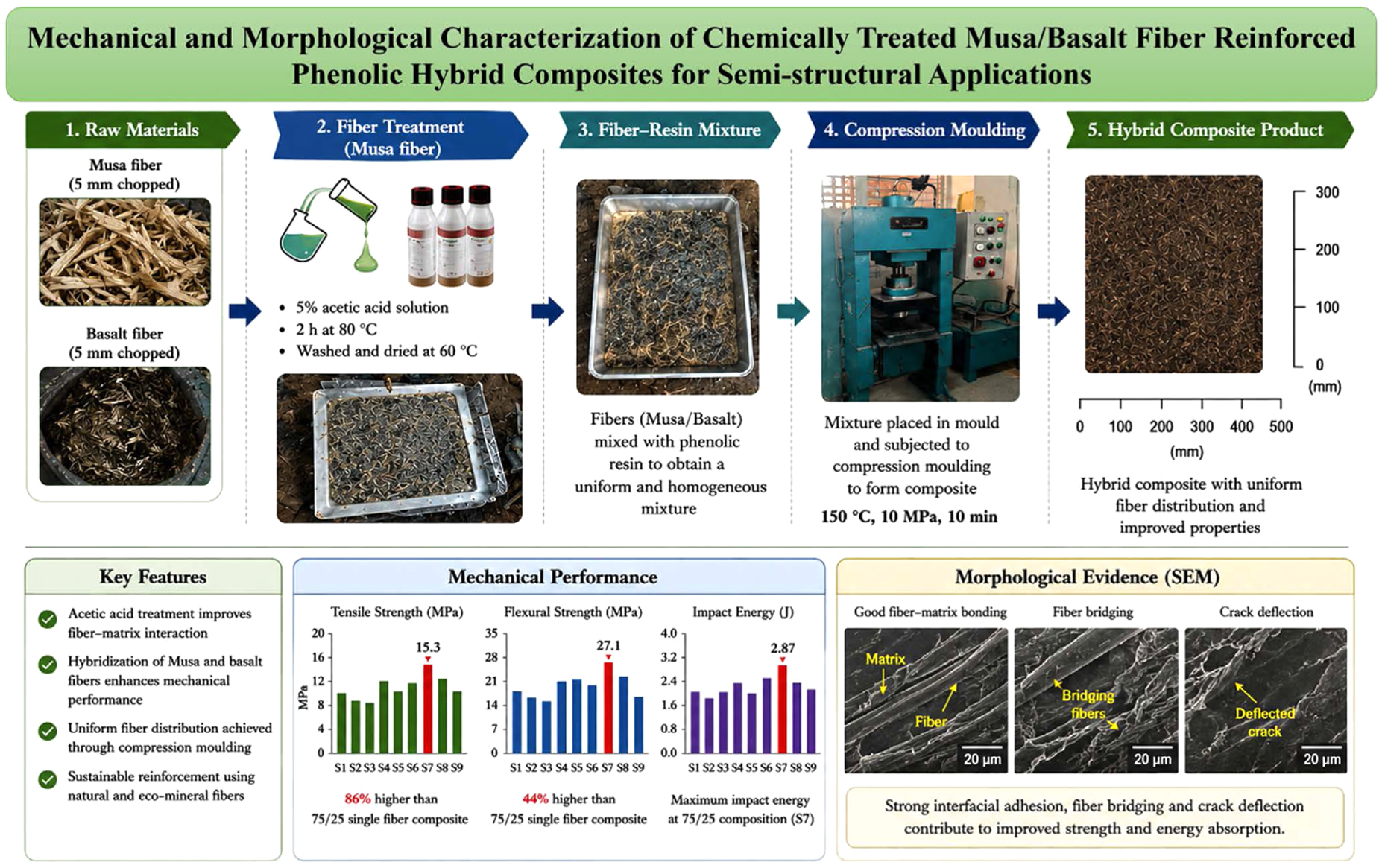
This study reports the development and characterization of phenolic-based hybrid composites reinforced with acetic acid-treated Musa fibers and basalt fibers. Nine formulations with different Musa/basalt weight ratios (100/0 to 0/100) were fabricated by compression molding and tested for tensile, flexural, impact, and morphological properties. The hybrid composite with 75 wt.% Musa and 25 wt.% basalt fibers (S7) exhibited the highest tensile strength (15.3 MPa) and flexural strength (27.1 MPa), representing 86% and 44% improvements over the Musa-only composite, and achieved a maximum impact strength of 76.57 kJ/m². These improvements are attributed to effective fiber bridging, crack deflection, and enhanced fiber–matrix adhesion, as confirmed by SEM analysis. The results demonstrate that Musa–basalt phenolic composites possess mechanical characteristics suitable for sustainable engineering applications.
A hybrid composite was made with the aid of acetic-treated Musa fibers and basalt fibers. It was the optimization of hybridization that formed a compact reinforcing network with effective interfacial bonding, enabling effective stress transfer, fiber bridging and deflection of cracks. The composite has enhanced tensile, flexural and impact performance.
Keywords: musa fiber, basalt fiber, hybrid composite, mechanical properties, sustainable, phenolic resin.
The authors sincerely thank to Alagappa Chettiar Government College of Engineering and Technology, Karaikudi, Tamil Nadu, India for providing the necessary facilities and support for this research work.
The authors declare no conflict of interest, financial or otherwise, related to this manuscript.
The global shift toward sustainable development has intensified research into advanced composite materials that combine lightweight characteristics, high mechanical performance, and minimal environmental impact.1,2 Conventional glass and carbon fiber-reinforced polymer composites possess high strength and durability; however, they rely on non-renewable resources, consume substantial energy during manufacturing, and pose disposal challenges at end-of-life.3,4 In this context, natural fiber-reinforced composites have emerged as promising alternatives due to their renewable nature, biodegradability, low density, and favorable strength-to-weight ratios.
Musa (banana) fibers are among the most widely used plant fibers for reinforcement, owing to their low cost, good mechanical properties, and high availability.5,6 Their utilization as an agricultural byproduct aligns with waste valorization and circular economy principles.7 Nevertheless, like most lignocellulosic fibers, Musa fibers exhibit inherent limitations, including moisture sensitivity, low thermal resistance, and moderate load-bearing capacity.6 Acetic acid treatment offers an environmentally friendly approach to reduce surface hydroxyl groups, remove amorphous constituents, and enhance fiber-matrix adhesion, thereby improving dimensional stability and mechanical performance.8
Hybrid composites are one of the major areas of research in the composite field.9 Hybridization allows using two or more fiber types to take advantage of the positive properties of an individual fiber, while reducing the negative properties associated with each type. Among the reinforcement materials, basalt fiber is a material of particular interest because it is an eco-mineral fiber coming from a natural volcanic rock, with high tensile strength, good fatigue resistance and excellent chemical and thermal resistance, and is environmentally friendly. Basalt fibers provide a more environmentally friendly alternative to synthetic fibers that provide more mechanical reliability without the environmental negative effects of natural fibers that fill the performance gap between them.10-12 Various natural fiber–basalt hybrid systems have been studied in recent times. Pothan et al. showed that a hydrogen bonding mechanism between the surface-treated banana fibers and the polyester matrix enhanced the adhesion between the two. Sathish et al. investigated the use of Cissus quadrangularis stem fiber in polymeric composites for the use in green engineering with banana chopped fiber. The systematic study of intentional variation in the fiber ratio, with detailed mechanical-morphological correlation, especially in terms of the mechanisms of stress transfer and the synergy effect of a hybrid composite in phenolic materials is limited. The synergistic effect of the combination of biodegradable Musa fibers and basalt fibers in a phenolic matrix and also the structure–property relationship has not been studied enough.
The present study aims to fill these gaps by systematically characterizing nine formulations having controlled weight ratio of Musa to basalt (100-0 to 65-35), comprehensive mechanical evaluation (tensile, flexural, impact properties) to optimize the hybridization, detailed morphological analysis to elucidate failure mechanisms, and quantitative correlation between the changes of the surface chemistry of the formulations and the corresponding enhancement of the mechanical properties. The aim of the study is to build renewable agricultural fiber-reinforced materials with high performance eco-mineral reinforcement to develop a reliable, environmentally friendly and sustainable lightweight material for the engineering applications.
Materials. Musa fibers of chopped length (5 mm) were obtained from M/S Eco green, Tamil Nadu, India. The chemical composition comprised 56–65% cellulose, 6–25% hemicellulose, 5–15% lignin, 3–5% pectin, and 2–3% ash.13,14 Basalt fibers (5 mm chopped length) were purchased from M/S Fiber Source, Tamil Nadu, India. Basalt fibers, as a mineral fiber, have low hydrophilicity, high tensile strength and high thermal stability. A resole-type phenolic resin (PFR301) was obtained from M/S Shivam Polymers and Chemicals, Maharashtra, India as it has excellent thermal stability, chemical resistance and intrinsic flame retardancy.15,16
Fiber Surface Modification. Musa fibers were treated with a 5% acetic acid solution for 2 hours at 60 °C to reduce hydroxyl groups, remove amorphous components, and improve fiber–matrix bonding.17,18 The treated fibers were washed with distilled water and dried in the oven at 60 °C for 24 h. Basalt fibers were used as received and did not require any processing because of their hydrophilicity and inertness properties.19,20 The treatment condition of acetic acid (5% acetic acid at 60 °C for 2 h) was chosen as per the literature which stated that acetic acid treatment resulted in optimum removal of natural fibers surface impurities, thus creating improved interfacial adhesion and mechanical performance of natural fiber-reinforced composites.17
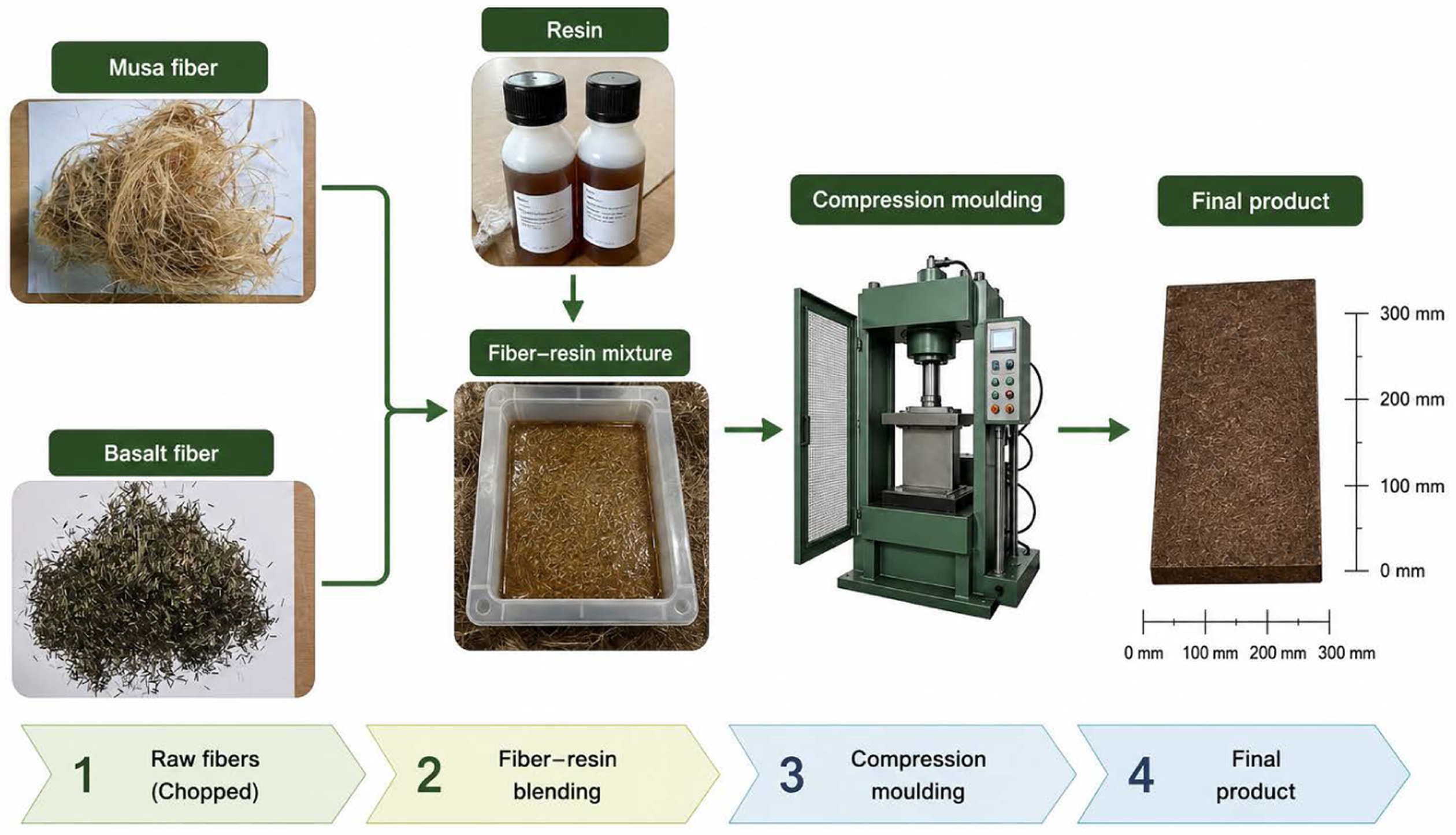
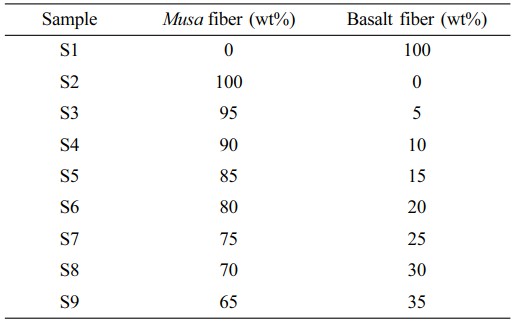
Hybrid Composite Fabrication. The ratio of matrix to reinforcement was kept constant at 60:40 wt%.21,22 In Table 1, the ratio of treated Musa fibers and untreated basalt fibers are listed, which were then uniformly dispersed with phenolic resin. The composite plates (300 × 300 × 3 mm) were prepared using compression molding at 2.6 MPa and 150 °C for 15 minutes.
The mold has been cured, and then demoulded after cooling down to room temperature naturally. There was no post-curing treatment. Fabrication was done in the ambient laboratory conditions of 28 °C and 55%RH. Figure 1 shows the sequential processes of the fabrication of the Musa/basalt fiber-reinforced phenolic hybrid composites.
Mechanical Testing. The tensile properties were tested with the specimens of size 165 × 19 × 3 mm (gauge length: 50 mm) as per ASTM D638-09. The flexural properties were determined on 125 × 12.5 × 3 mm using three-point bending according to ASTM D790-10. The impact resistance (IR) was measured under the ASTM D256 standard. All tests were conducted on the universal testing machine (Instron 5967, USA) equipped with 10 kN load cell, except the impact test which was performed with Tinius Olsen Impact 104 (Tinius Olsen, USA). The tests were performed at a controlled laboratory humidity of 50 ± 5%RH. 3 samples were taken for each composition and the results are given in Table 2 as Mean ± SD.
Microstructural Analysis. The morphology of the fracture surfaces has been investigated by scanning electron microscopy (SEM, Carl Zeiss EVO 18, Germany) at 10 kV acceleration voltage. For observation, samples were sputter coated with gold to prevent charging.
SEM analysis was used to classify the fracture types, dispersion of fibers and bonding characteristics at the fiber/matrix interface, and to establish structure–property relationships in the hybrid phenolic composites.
|
Figure 1 Fabrication stages of hybrid composite. |
|
Table 2 Overall Mechanical Properties of Prepared Phenolic Composites (Mean ± Standard Deviation) |
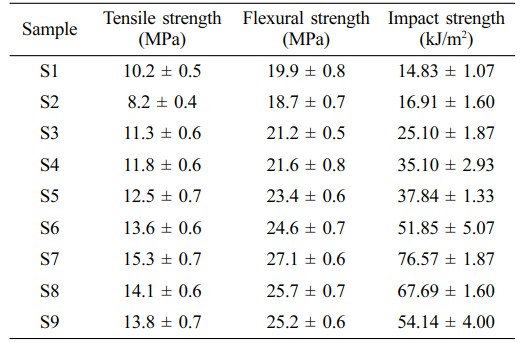
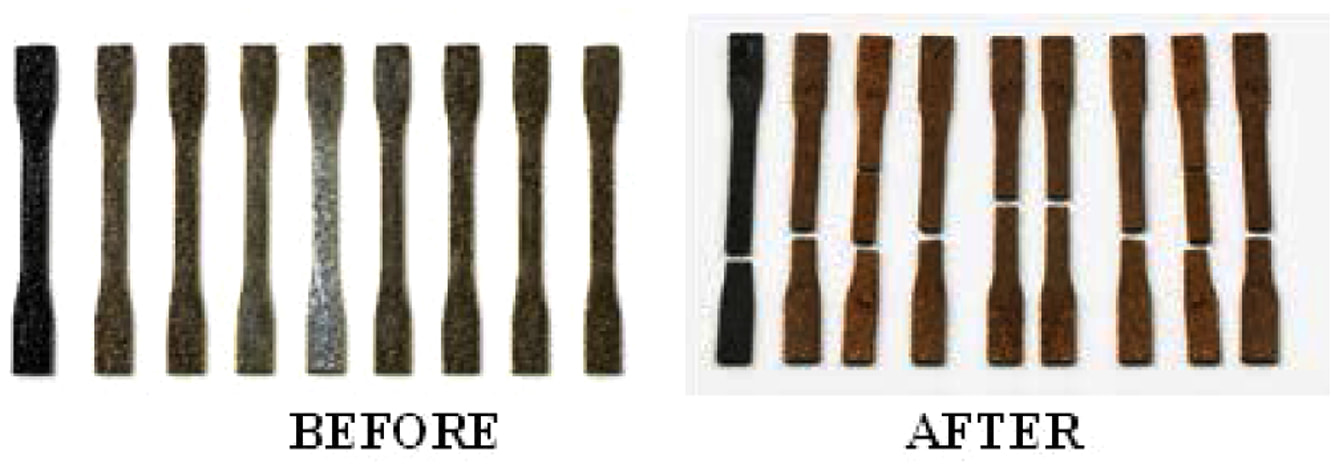
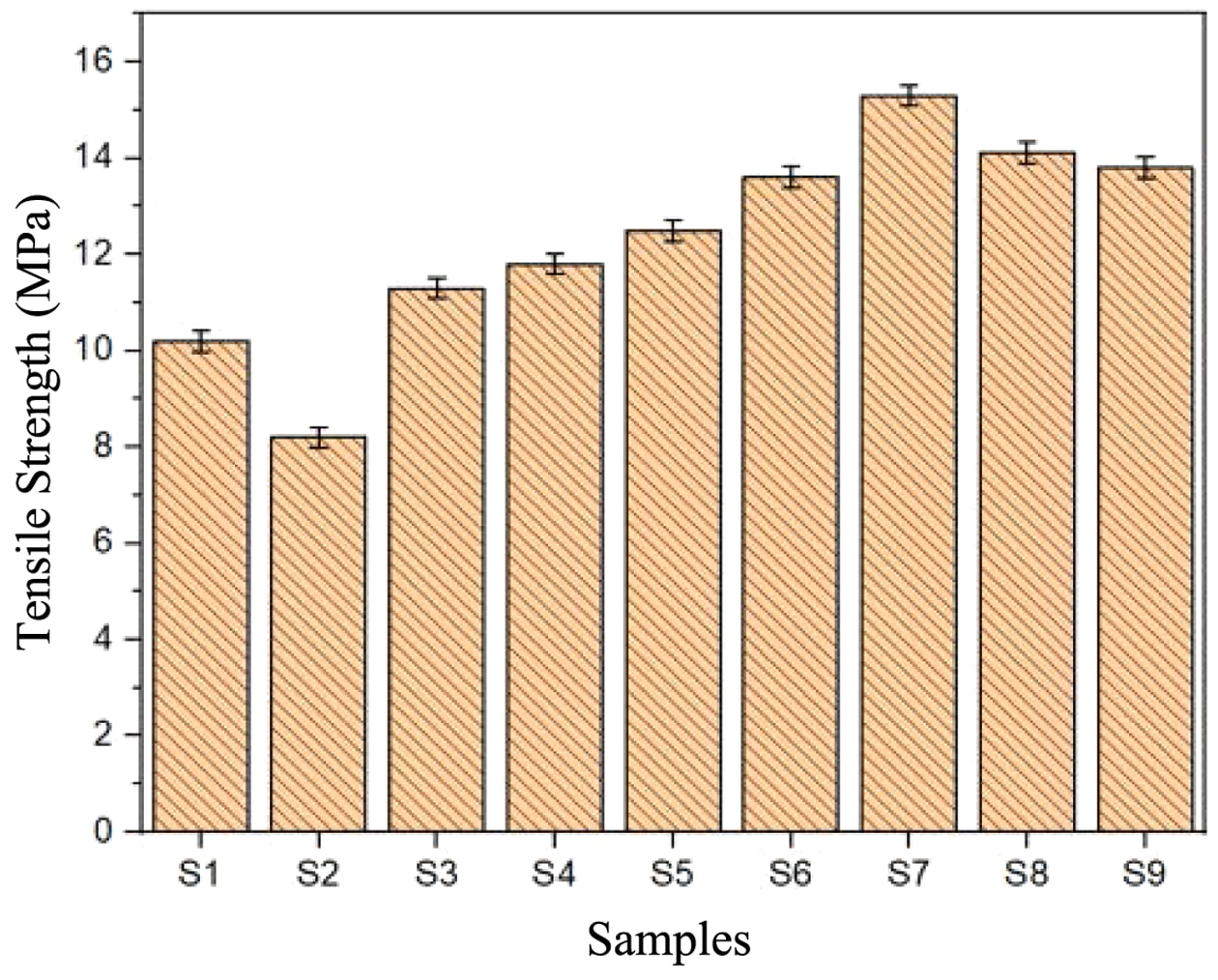
Tensile Properties. The tensile performance of the hybrid phenolic composites is presented in terms of tensile strength (Figure 3) and stress–strain curves (Figure 4), with numerical values provided in Table 2. Formulation S7 (75 wt% Musa / 25 wt% basalt) exhibited the highest tensile strength of 15.3 MPa, indicating an optimal hybridization effect. This represents an 86% improvement over the Musa-only composite (S2: 8.2 MPa) and a 50% improvement over the basalt-only composite (S1: 10.2 MPa). Acetic acid treatment cleans the surface of impurities such as waxes, hemicellulose and amorphous material, revealing hydroxyl-rich cellulose surfaces and increasing the surface roughness. This surface modification results in more mechanical interlocking at the fiber–matrix interface, better wettability by the phenolic resin, and the formation of hydrogen bonds between the hydroxyl groups of the treated Musa fibers and the phenolic network.22,23 It allows stress transfer to happen almost efficiently from the matrix to the reinforcing fibers, giving better tensile properties. The tensile test specimens before and after testing are shown in Figure 2.
The tensile strength of Musa fiber composites fabricated under an identical set of conditions showed to be 18–22% lower in comparison to their treated counterparts, suggesting that surface modification significantly improves the fiber–matrix interface. This result is in agreement with earlier studies on chemical treatment of natural fibers.18,19 A rule-of-the-mix approach was used to calculate the hybridization efficiency for S7. The experimental tensile strength (15.3 MPa) was 19.5% higher than the ROM prediction (12.8 MPa), showing a positive hybrid effect. This synergy is believed to be the result of complementary reinforcement mechanisms between Musa and Basalt fibers.10,23
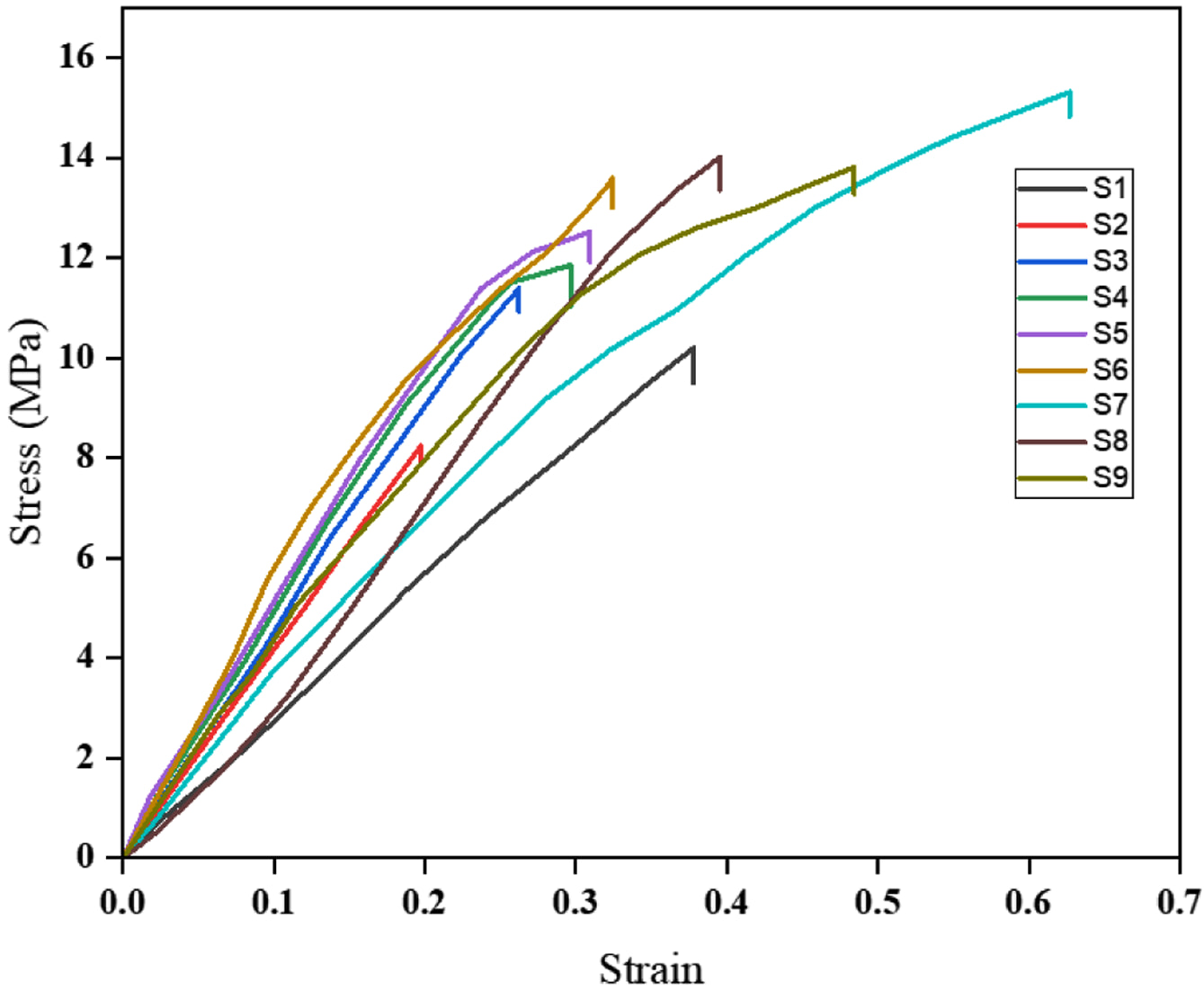
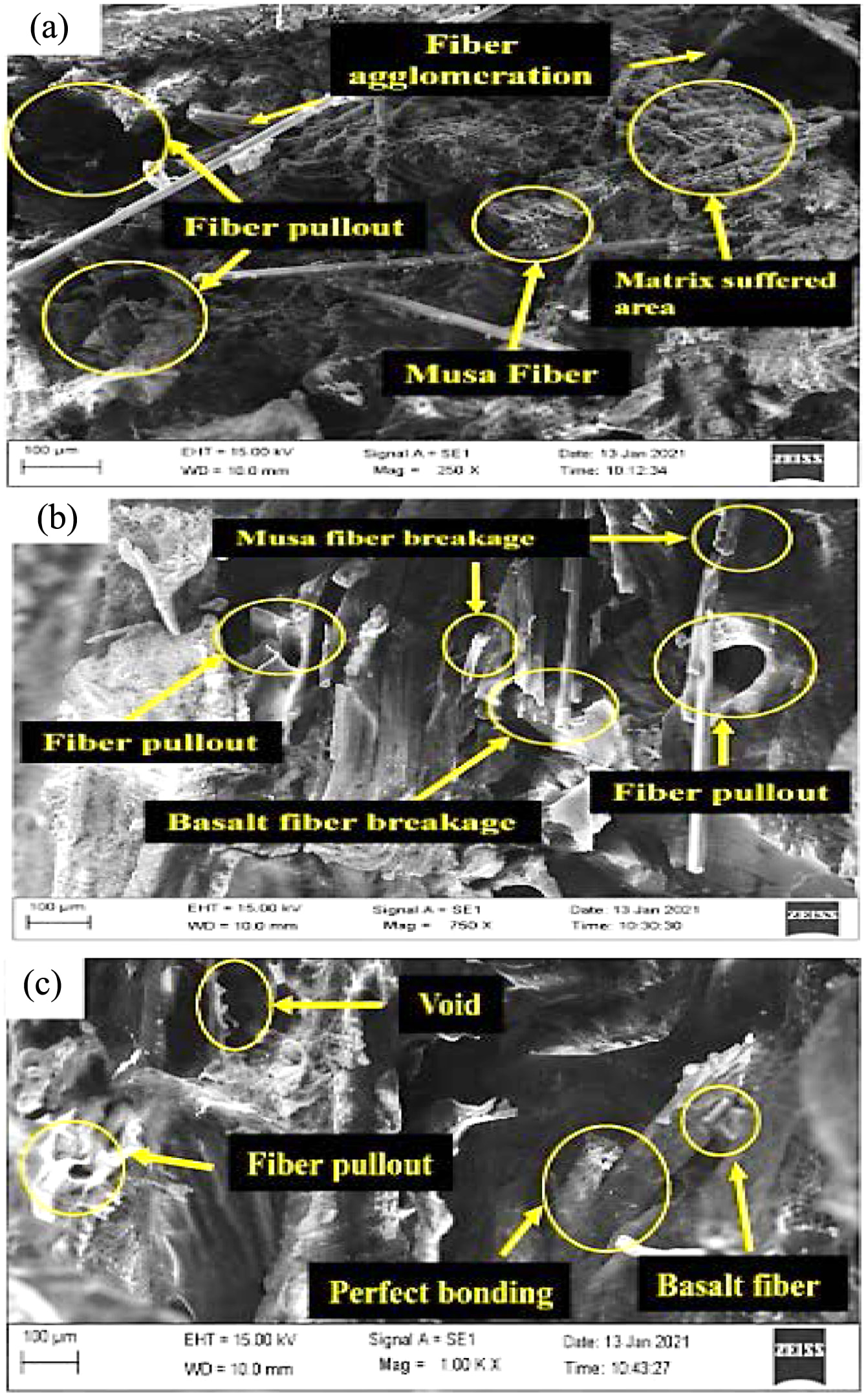
The stress–strain curves (Figure 4) show an initial linear elastic regime, which is associated with elastic deformation of the matrix and fibers, followed by nonlinear deformation associated with matrix yielding and progressive debonding of the interfaces. The highest strain-to-failure (2.8%) is shown by the S7 formulation, indicating proper distribution of stresses and good inter-interfacial bonding, resulting in increased ductility. As shown in the SEM analysis (Figure 7(c)), the fiber pull-out phenomenon was observed in low performance samples while the fiber breakage phenomenon was observed in the optimized S7 formulation, confirming strong fiber–matrix interface bonding, which is common in those with good performance.23
The lower tensile strength of the basalt-only composite (S1: 10.2 MPa) is attributed to insufficient chemical bonding between the inert silica-rich basalt surface and the highly crosslinked phenolic matrix, which permits only weak physical interactions and limited load transfer. Conversely, the Musa-only composite (S2: 8.2 MPa) suffers from the inherent drawbacks of natural fibers, including moisture sensitivity and moderate load-bearing capacity. These results are consistent with earlier reports on natural fiber/basalt hybrid systems.23
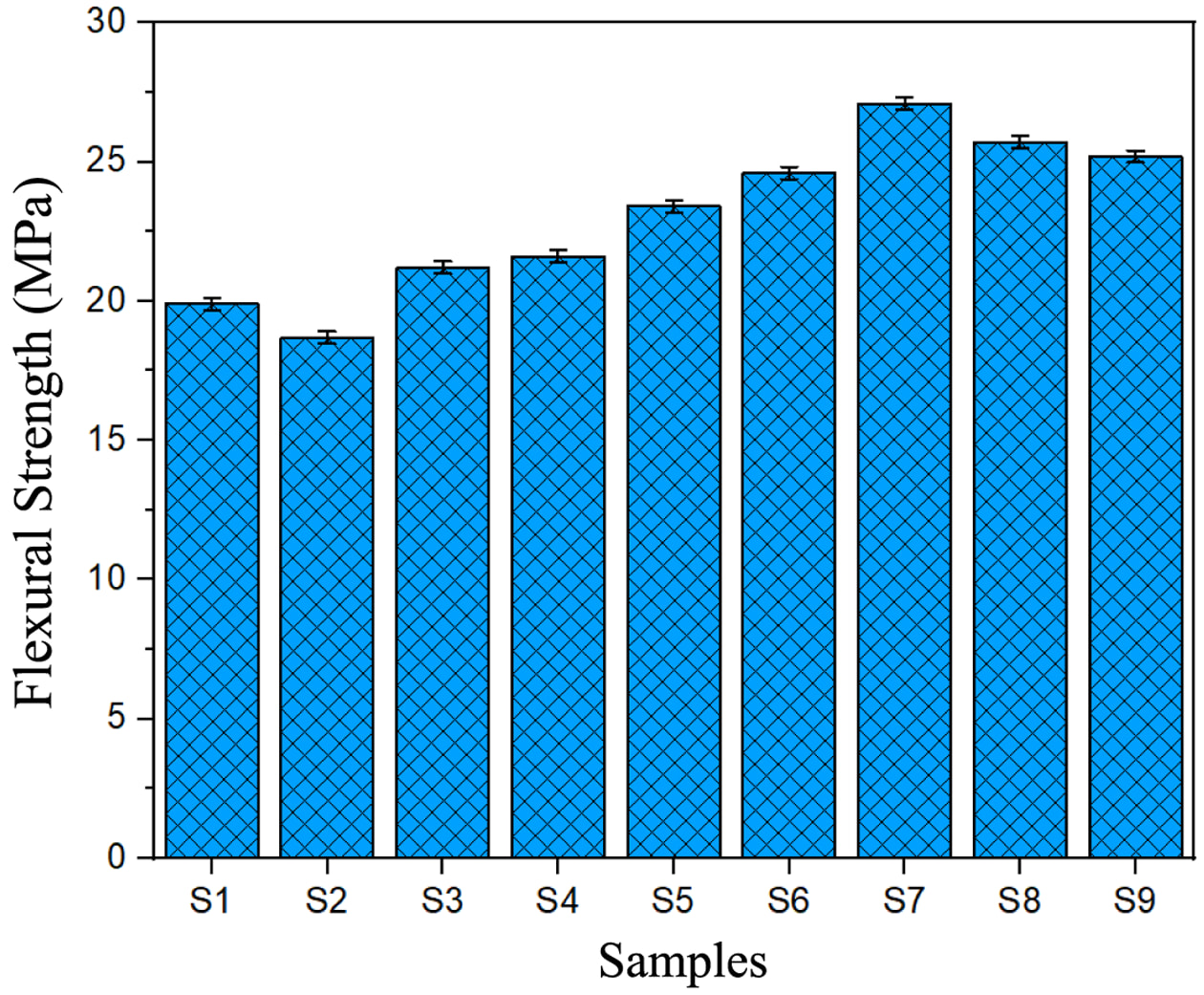
Flexural Properties. The flexural strength of all composite formulations is presented in Figure 5. The flexural strength of the Musa-only composite was 18.7 MPa while that of the basalt-only composite was 19.9 MPa, and Sample S7 had the highest strength at 27.1 MPa, which is a 44% improvement from the Musa-only composite, and a 36% improvement from the basalt-only composite. This enhancement is due to three reasons: (1) the predominant network of treated Musa fibers provides good resin wetting and reduces interlaminar shear, (2) the high-modulus basalt fibers increase the bending rigidity, and (3) better interfacial adhesion allows efficient stress transfer under bending loads.23 The use of acetic acid increases the interfacial bonding, leading to a decreased amount of interfacial sliding and micro buckling under compressive stresses during flexural testing.
The low flexural strength of the basalt-only composite (19.9 MPa) results from poor interfacial compatibility with the phenolic matrix, leading to interfacial sliding and micro-buckling under compression. The increase in flexural strength from 21.2 MPa to 27.1 MPa with increasing basalt content up to 25 wt% demonstrates the positive contribution of basalt incorporation against bending stresses. However, flexural strength decreased at higher basalt concentrations (S8 and S9), indicating that excessive basalt content introduces interfacial defects that compromise flexural performance.
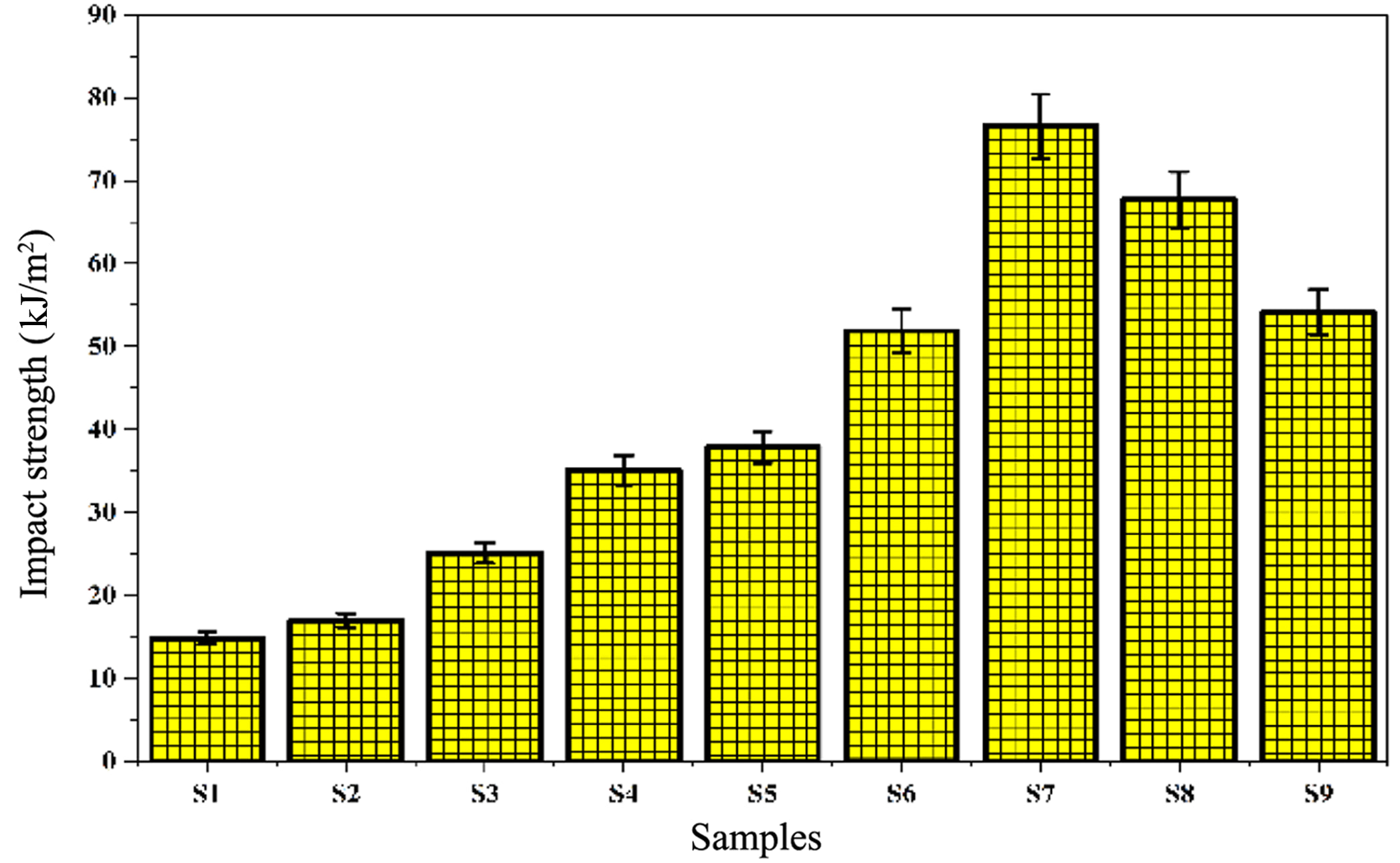
IR. Energy absorption under impact is an important criterion to evaluate the dynamic fracture behaviour. All formulations had impact strengths as indicated in Figure 6. The Musa-only composite (S2) had a low impact strength of 16.91 ± 1.60 kJ/m2 because of the poor load transfer and brittle properties of the natural fibers at high strain rates. The impact strength value of the basalt-only composite (S1) was slightly lower (14.83 ± 1.07 kJ/m2) due to poor interfacial adhesion which restricted the distribution of the stress.
The sample S7 showed the maximum impact strength of 76.57 kJ/m2 which is a 416.18% improvement compared with the impact strength of the sample S1 (basalt only composite) and 352.75% improvement compared with the sample S2 (Musa only composite). The large improvement is largely due to good fiber-matrix interactions and the ability to absorb energy by means of crack deflection, fiber bridging and delayed crack propagation. The observed hybrid effect is repeatable and reliable as revealed by the statistical analysis (standard deviations in Table 2). The content of basalt fibers had a synergistic effect on increasing the impact strength up to 25 wt% (from 25.10 kJ/m2 for S3 to 76.57 kJ/m2 for S7). After this optimum (S8: 67.69 kJ/m2, S9: 54.14 kJ/m2), the impact strength decreased and followed the same trend as that of tensile and flexural properties. This drop is believed to be due to fiber agglomeration and loss of interfacial integrity at too high a basalt content.
Morphological Analysis. Scanning electron microscopy was employed to elucidate fracture mechanisms and interfacial characteristics of the hybrid phenolic composites. SEM micrographs of representative samples (Figure 7) demonstrate the significant influence of fiber composition on dispersion quality and interfacial bond strength. Figure 7(a) (Sample S8: 70 wt% Musa / 30 wt% basalt) reveals fiber agglomeration when basalt content exceeds 25 wt%, resulting in insufficient resin coverage around basalt fibers. These agglomerated regions serve as preferential crack initiation sites and promote brittle fracture, explaining the reduced mechanical performance of S8 and S9 (Figures 3–6). Figure 7(b) (Sample S3: 95 wt% Musa / 5 wt% basalt) shows extensive fiber pull-out, matrix cracks, and voids characteristics of poor interfacial bonding and inefficient stress transfer. The predominance of pull-out over fiber breakage explains the relatively poor mechanical properties of low-basalt formulations.
Figure 7(c) (Sample S7: 75 wt% Musa / 25 wt% basalt) exhibits the most favorable morphology, with well-embedded fibers, no observable voids, continuous and uninterrupted fiber–matrix interfaces, and predominantly fiber breakage rather than pull-out. These features indicate strong interfacial adhesion and effective stress transfer, directly accounting for the superior mechanical properties of S7. The following consistent terminology will be used throughout this section: fiber agglomeration (clustering of multiple fibers), voids (empty spaces/pores), fiber pull-out (fiber debonding and extraction from matrix), fiber breakage (fracture of fibers), and interfacial debonding (separation at the fiber–matrix interface). The SEM micrographs were then analyzed to determine the area fractions of agglomeration for each specimen, S8 (30 wt% basalt) and S9 (35 wt% basalt) had an area fraction of 18.3% and 22.7% respectively, while S7 (25 wt% basalt) had an area fraction of 6.2%. A direct correlation is observed between the agglomeration density and the decrease in mechanical properties, which supports the theory that as agglomeration density increases, stress concentration sites are also present that tend to induce brittle fracture.
|
Figure 2 Tensile test specimens before and after testing. |
|
Figure 3 Tensile strength of prepared composite samples. |
|
Figure 4 Representative stress-strain curves for tensile testing of Musa/basalt hybrid composites. |
|
Figure 5 Flexural strength of prepared composite samples. |
|
Figure 6 Impact strength of prepared composite samples. |
|
Figure 7 SEM micrographs of fracture surfaces: (a) S8 (70/30); (b) S3 (95/5); (c) S7 (75/25). |
In this study, nine phenolic composites reinforced with acetic acid-treated Musa fibers and chopped basalt fibers were successfully fabricated by compression molding and systematically characterized. The following conclusions are drawn:
1. The hybrid composite with Musa fiber (75 wt%) and basalt fiber (25 wt%) (S7) showed the best mechanical properties with tensile strength of 15.3 MPa (86% enhancement when compared with composite containing only Musa fiber) and flexural strength of 27.1 MPa (44% enhancement when compared with composite containing only Musa fiber) and impact strength of 76.57 kJ/m² (417% enhancement when compared with composite containing only Musa fiber).
2. The mechanical properties of the basalt/phenolic composites are low, which is due to high crosslinking of the polymer matrix and poor chemical adhesion between the phenolic matrix and the inert silica-rich surface of basalt. In contrast, acetic acid-treated Musa fibers have hydroxyl-rich surfaces which can favor hydrogen bonding and potential ether linkages with phenolic network. The observed fiber pull-out to fiber breakage during SEM study is indicative of strong interfacial adhesion, which is consistent with the presence of hydrogen bonding mechanisms reported in the literature.
3. A basalt loading threshold of 25 wt% was identified; beyond this level, interfacial defects and fiber agglomeration compromise mechanical performance, establishing a critical processing structure–property relationship.
4. Morphological analysis revealed that the optimized composite (S7) displays homogeneous fiber dispersion, minimal void content, and predominantly fiber breakage rather than pull-out key indicators of effective stress transfer and strong interfacial adhesion.
5. The optimized Musa/basalt phenolic composite (75/25 wt%) has shown good mechanical properties, as measured by tensile, flexural and impact properties. But full characterization of moisture absorption, thermal stability, flammability, fatigue characteristics, and environmental durability is needed to get a complete picture of its applicability to long-term sustainable applications.
The developed composites are suggested to be further investigated such as spectroscopic analysis to confirm the bonding mechanism at the interface, moisture absorption, thermal stability, flammability, fatigue and environmental durability studies to evaluate the long-term performance.
- 1. Jothiprakash, V. M.; Gurijala, C.; Sathish, K.; Balachandar, M.; Sakthi Sadhasivam, R. M. Mechanical and Tribological Behavior of Pineapple Leaf and Kenaf Fiber Reinforced Vinyl Ester Hybrid Composites. Proc. Inst. Mech. E: J. Process Mech. Eng. 2026, 240, 360-368.
-

- 2. Ramakrishnan, M.; Kalimuthu, R.; Selvaraj, S.; Geetha, S. Optimized Tribological Behaviour of Musa–basalt–sic Hybrid Composites Using Rsm. MatTech 2026, 60, 357-364.
-
- 3. Kim, D.-H.; Kim, Y.-C. Study on the Physical Properties of PP/Kenaf Fiber Composite According to Fiber Length and Grafted Degree of Maleic Anhydride. Polym. Korea 2024, 48, 384-389.
-
- 4. Ayyappan, V.; Raghunathan, V.; Tengsuthiwat, J.; Rangappa, S. M.; Siengchin, S. Development of Commercial Fully Bio-Based Sport Utility Using Jute/Hemp Bio-Epoxy Composite: Influence of Stacking Sequence on the Fatigue, Thermo-Mechanical, Vibrational and Viscoelastic Behavior. J. Polym. Res. 2025, 32, 198.
-
- 5. Based, M. A. Extraction of Banana Fiber and Characterization Analysis of Hybrid (Banana, Jute, Carbon and Glass) Reinforced Composite Materials. Results Mater. 2025, 28, 100803.
-
- 6. Suyambulingam, I.; Sivanantham, G.; Divakaran, D.; Ayrilmis, N.; Priyadharshini, G. S.; Senthamaraikannan, P.; Munusamy, Y. Banana Peel Waste as a Source of Cellulosic Filler: Isolation, Characterization, and Its Potential as a Green Reinforcement in Polymer Composites. J. Mater. Cycles Waste Manag. 2025, 27, 4465-4482.
-
- 7. Ganesan, S. K.; Balasubramanian, K.; Ganesan, B.; Stanislaus Arputharaj, B.; Rajendran, P.; Singh, S.; Varshney, D.; Maranan, R.; Raja, V. Experimental Investigation on Thermal Properties of Banana/Jute with Glass Fibers Reinforced Polymer Hybrid Composite Materials. Next Mater. 2026, 10, 101377.
-
- 8. Kim, K.; Cho, D. Effects of Concentration and Temperature of NaOH Solution for Alkali Treatment of Coir Fiber Mat on the Mechanical Properties of Coir Fiber Mat/Unsaturated Polyester Composites. Polym. Korea 2021, 45, 501-510.
-
- 9. Mohanraj, C. M.; Rameshkumar, R.; Mariappan, M.; Mohankumar, A.; Rajendran, B.; Senthamaraikannan, P.; Suyambulingam, I.; Kumar, R. Recent Progress in Fiber Reinforced Polymer Hybrid Composites and Its Challenges-A Comprehensive Review. J. Nat. Fibers 2025, 22, 2495911.
-
- 10. Sathish, V. C.; Narayanan, S.; Kumaravelan, R.; Surendiran, T. Investigation on Cissus Quadrangularis Stem Fiber Reinforced Novel Polymeric Composite with Banana Chopped Fiber for Green Engineering Applications. Polym. Korea 2025, 49, 401-410.
-
- 11. Jagadeesan, R.; Suyambulingam, I.; Selvaraj, M.; Divakaran, D.; Kumaresan, K.; Balaji, N. S.; Rangappa, S. M.; Siengchin, S. Comprehensive Characterization of Novel Agro-Industrial Waste Azadirachta indica A. Juss Oil Cake Derived Cellulose Micro Fillers Reinforced with Basalt/Banana Fiber Based Hybrid Polymeric Composite for Lightweight Applications. Fibers Polym. 2025, 26, 2673-2689.
-
- 12. R., K.; K. R., P.; Bheemappa, S. Experimental Investigations on the Mechanical Behavior of Basalt Fabric Reinforced Epoxy Composites. J. Polym. Res. 2025, 32, 83.
-
- 13. Badanayak, P.; Jose, S.; Bose, G. Banana Pseudostem Fiber: A Critical Review on Fiber Extraction, Characterization, and Surface Modification. J. Nat. Fibers 2023, 20, 2168821.
-
- 14. Gupta, U. S.; Dhamarikar, M.; Dharkar, A.; Chaturvedi, S.; Tiwari, S.; Namdeo, R. Surface Modification of Banana Fiber: A Review. Mater. Today Proc. 2021, 43, 904-915.
-
- 15. Choi, I. G.; Lee, T.-M.; Yang, S.-J.; Oh, S.-J.; Bae, J.-W.; Nam, B.-U. Mechanical Properties and Crystallization Behavior of Surface-Treated Waste Phenol Resin-Based Polyamide 6 Composites. Polym. Korea 2025, 49, 306-316.
-
- 16. Jiang, L.; Ren, L.; Zhang, Y.; Zhou, W.; Wang, X.; Xiao, L. Improving the Flame Retardancy, Smoke Suppression and Mechanical Properties of Polyurethane Using Novel Organic–Inorganic Hybrid Composite Microspheres of Zirconium Modified Phenolic Resin and Montmorillonite. Chem. Eng. J. 2025, 507, 160727.
-
- 17. Kommula, V. P.; Reddy, K. O.; Shukla, M.; Marwala, T.; Reddy, E. V. S.; Rajulu, A. V. Extraction, Modification, and Characterization of Natural Ligno-cellulosic Fiber Strands From Napier Grass. Int. J. Polym. Anal. Characterization 2016, 21, 18-28.
-
- 18. Ezeamaku, U. L.; Onukwuli, O. D.; Ezeh, M. E.; Eze, I. O.; Odimegwu, N. E.; Agu, C. P. Experimental Investigation on Influence of Selected Chemical Treatment on Banana Fiber. Ind. Crops Prod. 2022, 185, 115135.
-
- 19. Hurtado-Figueroa, O.; Varum, H.; Prieto, M. I.; Gallardo Amaya, R. J.; Escamilla, A. C. The Alkaline Treatment and Its Influence on the Physicomechanical Properties of Plantain Pseudostem Fibers - A Comparative Study of Treated and Untreated Fibers. Heliyon 2025, 11, e41843.
-
- 20. Reddy, M. I.; Sethuramalingam, P.; Sahu, R. K. Comprehensive Characterization of Novel Jute Fabrics with Musa Paradisiaca Leaf Agro-Waste Based Micro Cellulosic Fillers Reinforced Epoxy Composites For Lightweight Applications. Fibers Polym. 2025, 26, 1691-1703.
-
- 21. Jagadeesh, H.; Banakar, P.; Sampathkumaran, P.; Sailaja, R.; Katiyar, J. K. Influence of Varying Matrix/fiber Concentration on Mechanical Properties of Bi-directional Carbon Fiber Reinforced Polymer Composite. J. Reinf. Plast. Compos. 2024.
-
- 22. Nagaraja, K. C.; Rajanna, S.; Prakash, G. S.; Rajeshkumar, G. Mechanical Properties of Polymer Matrix Composites: Effect of Hybridization. Materials Today: Proceedings 2021, 34, 536-538.
-
- 23. Pothan, L. A.; George, J.; Thomas, S. Effect of Fiber Surface Treatments on the Fiber–matrix Interaction in Banana Fiber Reinforced Polyester Composites. Compos. Interfaces 2002, 9, 335-353.
-
- Polymer(Korea) 폴리머
- Frequency : Bimonthly(odd)
ISSN 2234-8077(Online)
Abbr. Polym. Korea - 2025 Impact Factor : 1.0
- Indexed in SCIE
 This Article
-
2026; 50(5): 754-761
Published online Sep 25, 2026
- 10.7317/pk.2026.50.5.754
- Received on May 20, 2026
- Revised on Jul 13, 2026
- Accepted on Jul 14, 2026
Services
- Full Text PDF
- Abstract
- ToC
- Acknowledgements
- Conflict of Interest
Introduction
Experimental
Results and Discussion
Conclusion
- References
Shared
Correspondence to
- Ramakrishnan Maniram
-
Department of Mechanical Engineering, Alagappa Chettiar Government College of Engineering and Technology, Karaikudi 630003, India
- E-mail: bahuram1998@gmail.com
- ORCID:
0009-0003-1135-5413
 Copyright(c) The Polymer Society of Korea. All right reserved.
Hyecheon Building(Room 601), #354, Gangnam-Daero, Gangnam-Gu, Seoul 06242, Korea
TEL : 82-2-568-3860, 561-5203, 569-3860 FAX : 82-2553-6938 E-mail: polymer@polymer.or.kr